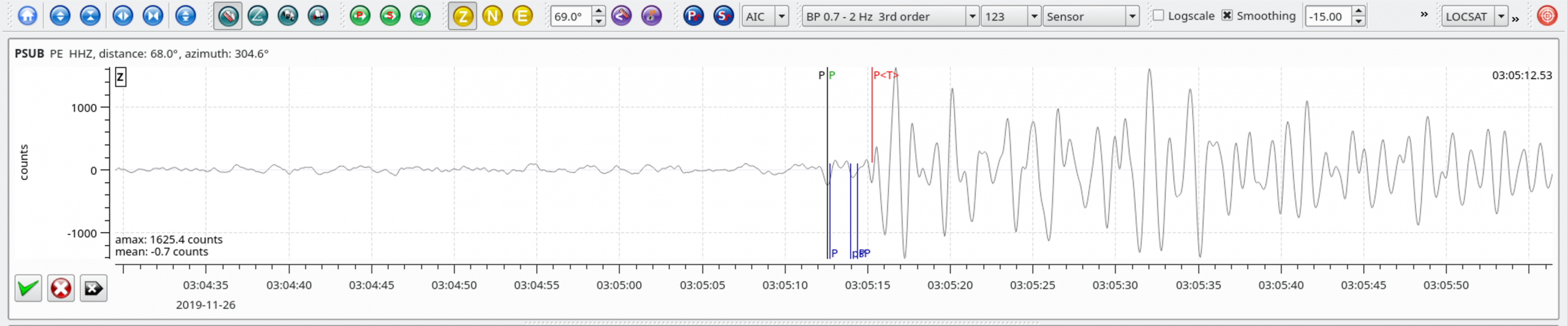
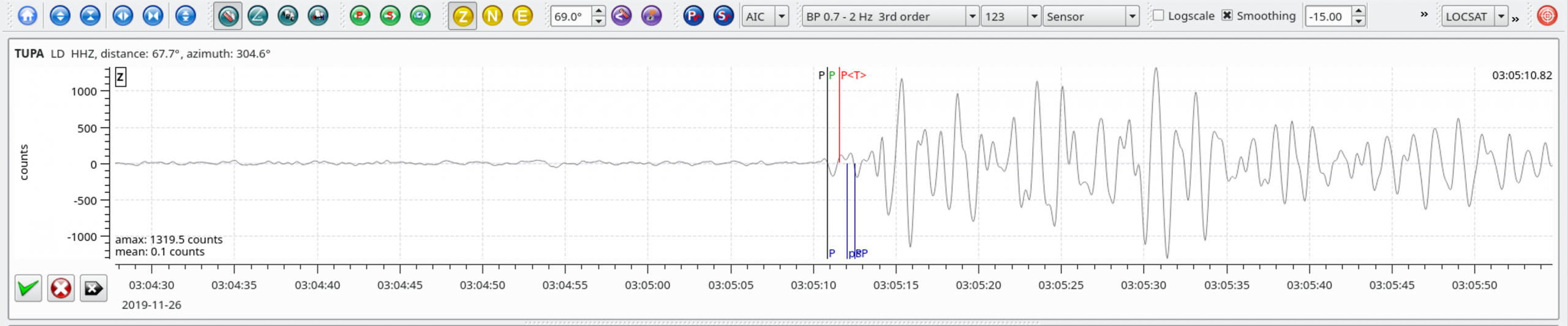
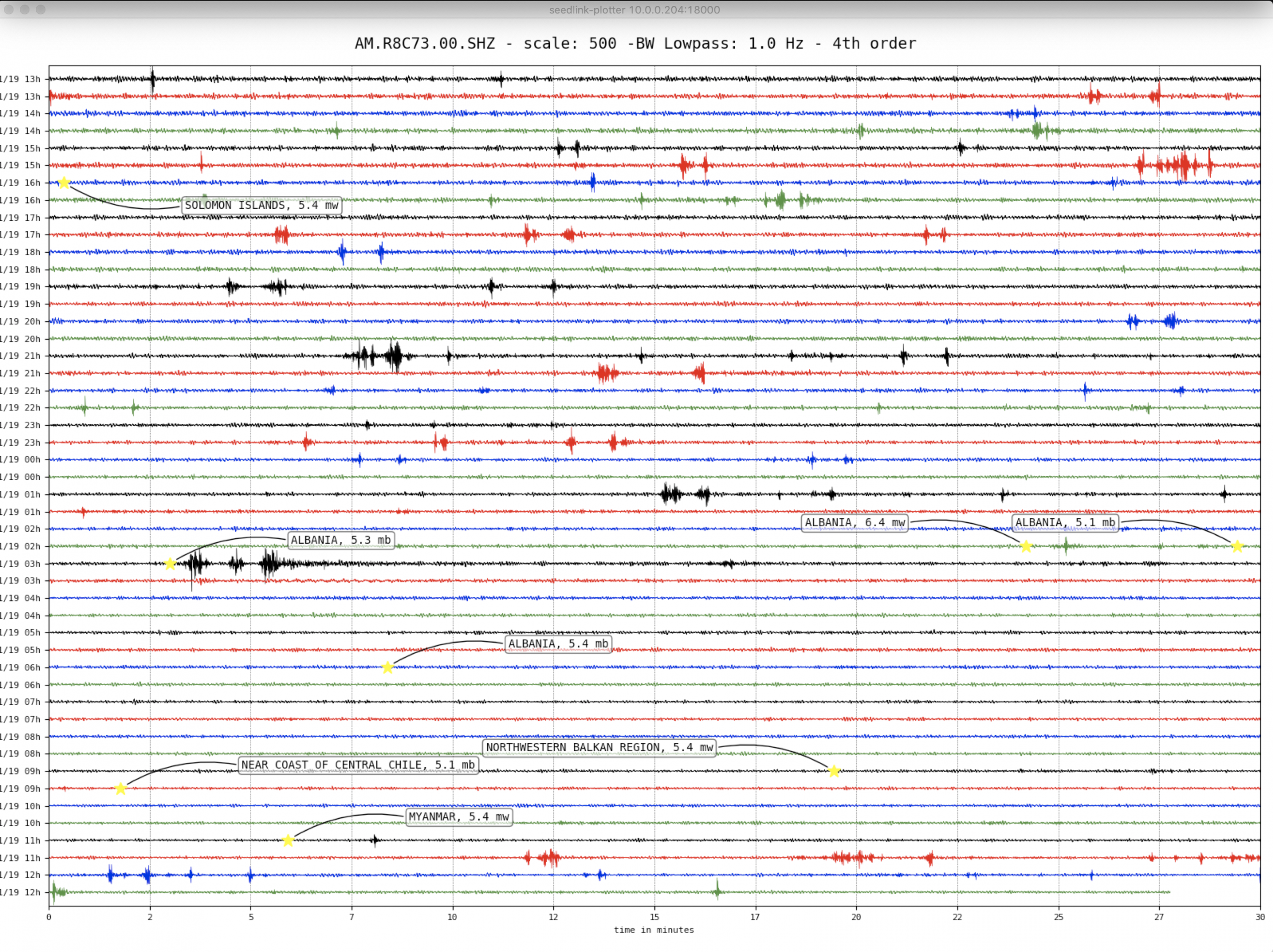
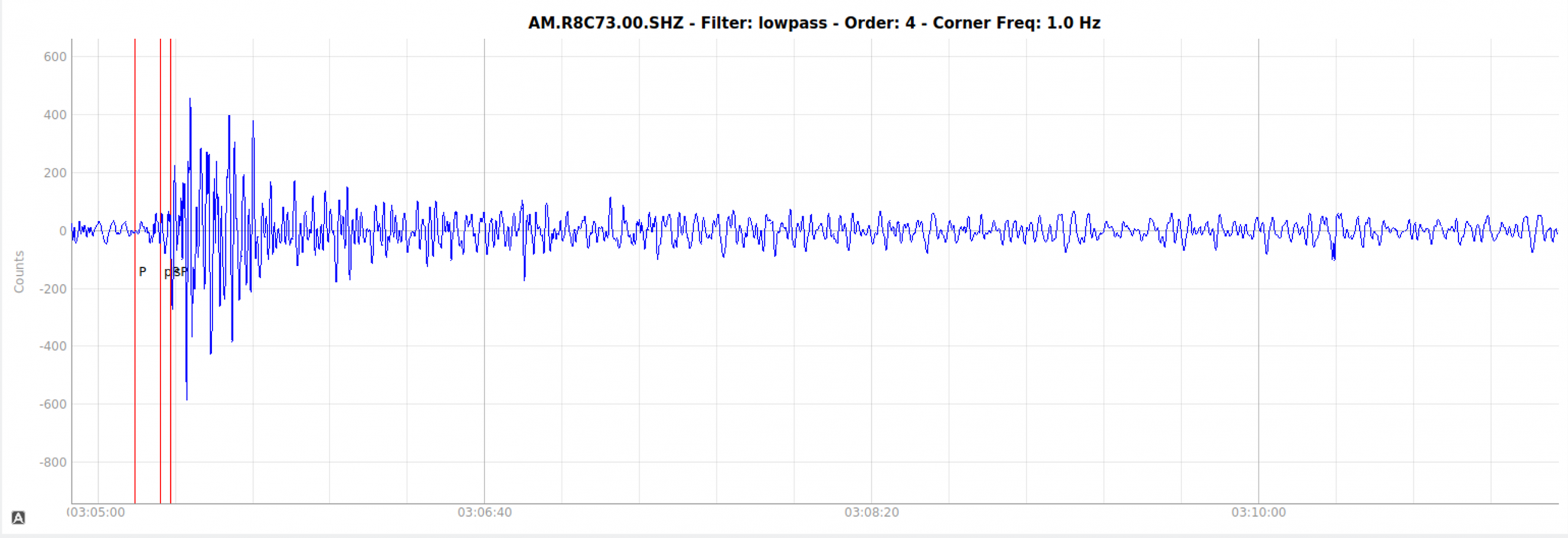
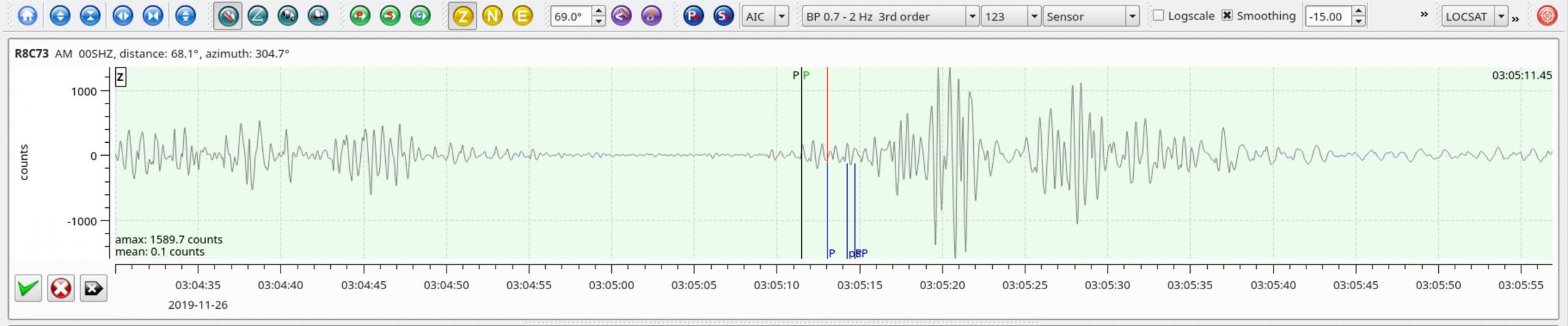
Albania – M6.4 – Nov 26, 2019 at 02:54:12 UTC

12km WSW of Mamurras, Albania

Latitude Longitude Depth (km) Dist (Deg) Dist (Km) Azimuth
41.521 19.559 20.0 68.2 7,580 304.7


USGS Information Page

Tectonic Summary

The November 26, 2019, M 6.4 Albania earthquake occurred as the result of thrust faulting near the convergent boundary of the Africa and Eurasia plates. Focal mechanism solutions indicate reverse slip on a shallow or steeply dipping fault. Northwest-Southeast striking reverse faulting is consistent with the tectonics of the region. At the location of this event, the Africa plate converges with the Eurasia plate at a rate of 73 mm/year.

Tectonics of the Mediterranian Sea, in the convergent boundary region between Africa and Eurasia, are complex, and involve the motions of numerous microplates and regional-scale structures. In the context of the November 26, 2019 earthquake, reverse faulting in Albania on the eastern shores of the Adriatic is consistent with the closing of that sea, and shortening across the mountain belts stretching from Croatia to Greece.

Large earthquakes are common in this region; seven M6 and larger events have occurred within 150 km of this November 26 earthquake over the past 100 years. The largest was a M6.9 earthquake on April 15, 1979 that occured 70 km to the north-northeast of the November 26th earthquake, killing 100 people in Montenegro, 35 in Albania and leaving 100,000 people homeless. A M6.7 earthquake on November 30, 1967, 80 km to the east of today’s event, resulted in 19 fatalities and significant damage in the surrounding region.
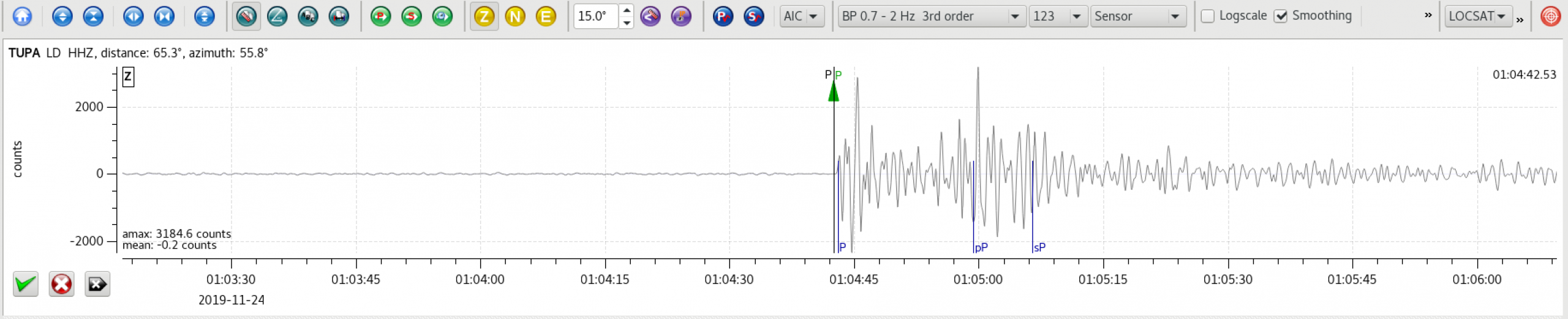
Local SeisComP3 P-wave Arrivals
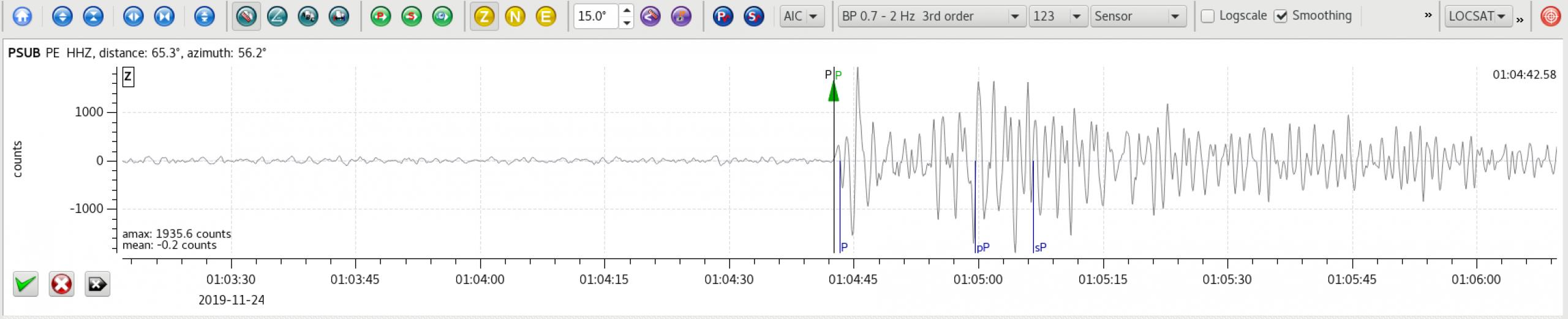
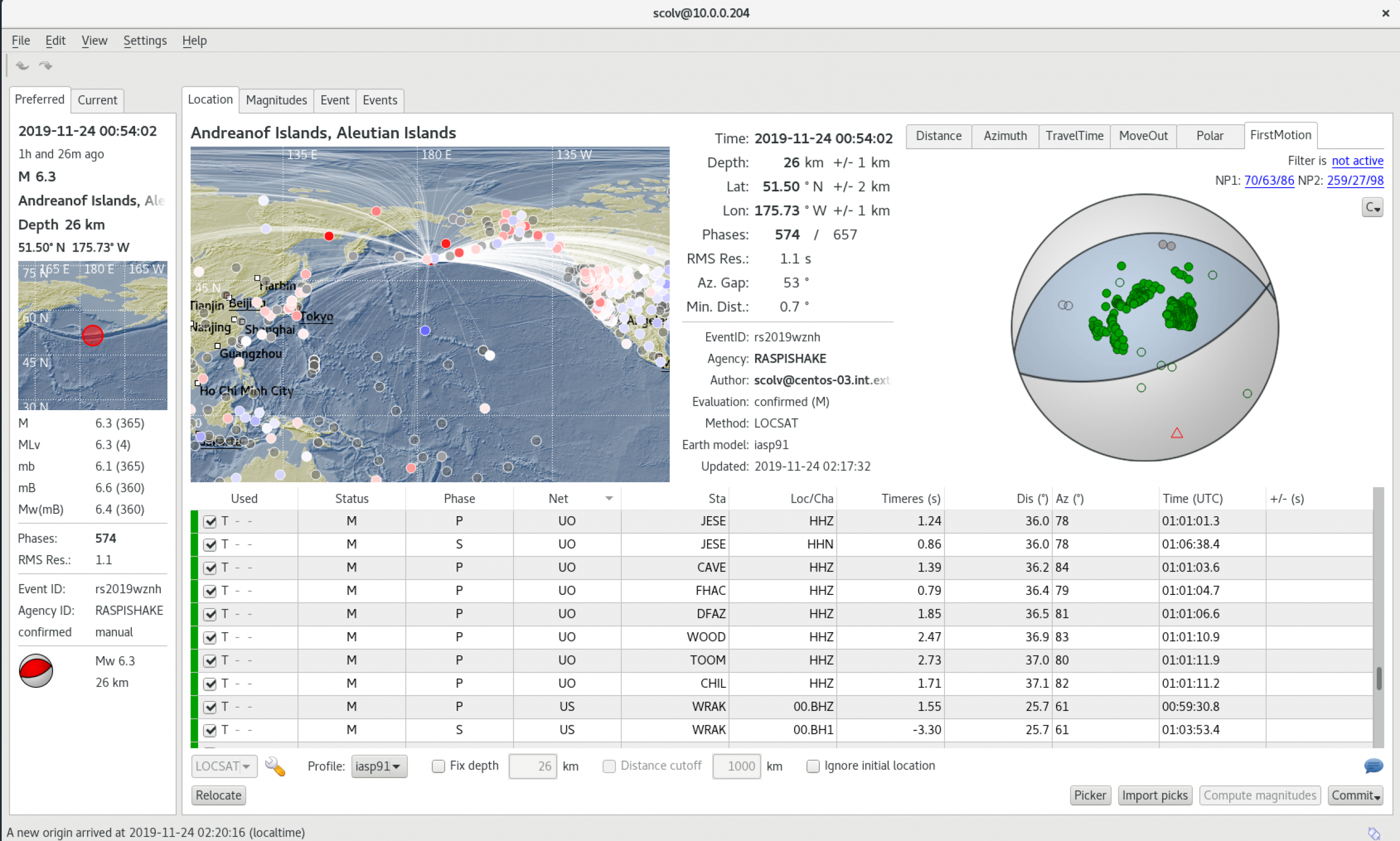
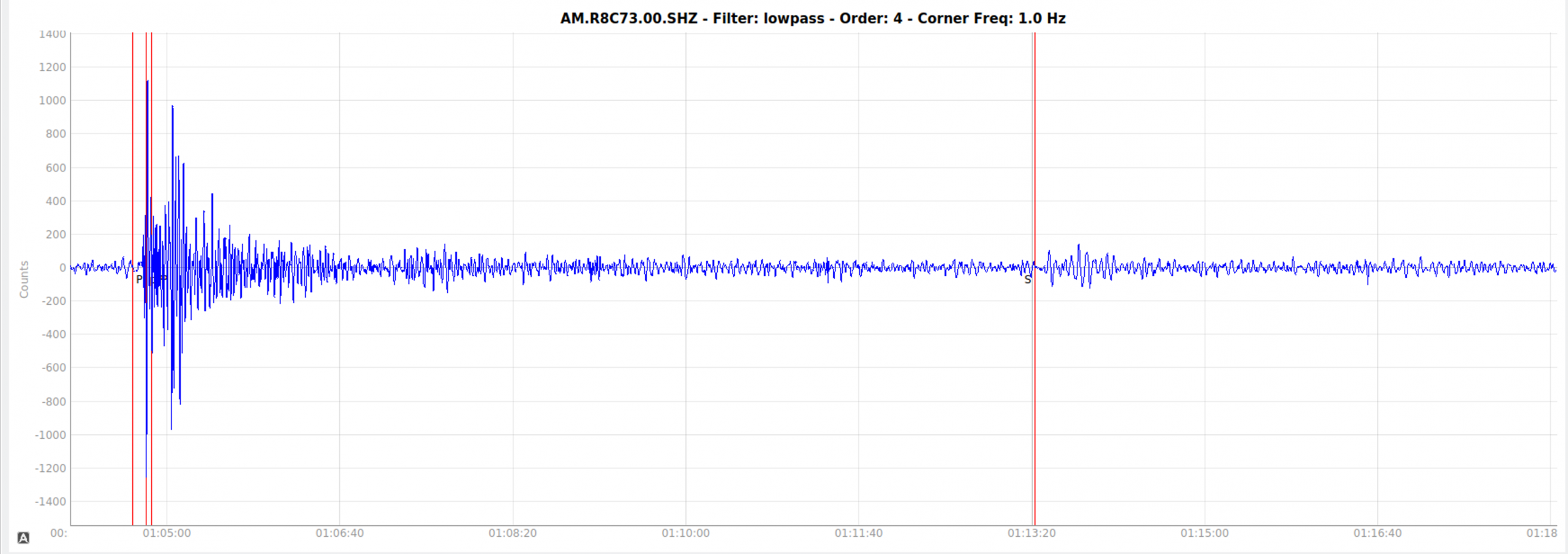
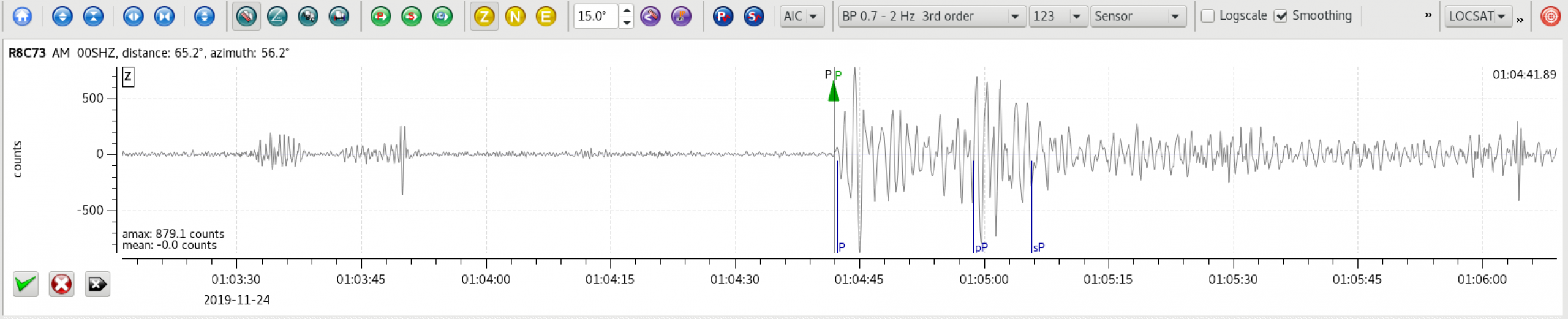
Alaska – M6.3 – Nov 24, 2019 at 00:54:02 UTC

85km ESE of Adak, Alaska

Latitude Longitude Depth (km) Dist (Deg) Dist (Km) Azimuth
51.527 -175.559 25.1 65.3 7,260 56.2


USGS Information Page

Local SeisComP3 P-wave Arrivals

Mexico – M6.3 – Nov 20, 2019 at 04:27:05 UTC

111km SW of Puerto Madero, Mexico

Latitude Longitude Depth (km) Dist (Deg) Dist (Km) Azimuth
13.982 -93.130 11.0 30.2 3,354 27.4


USGS Information Page

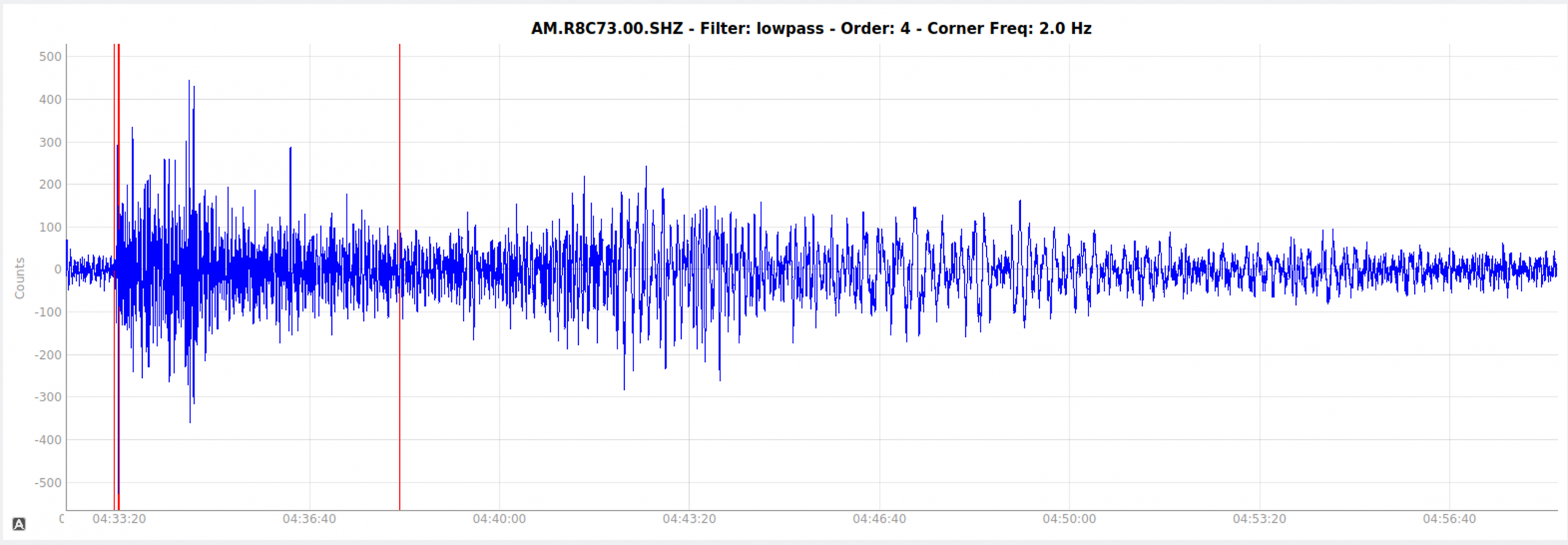
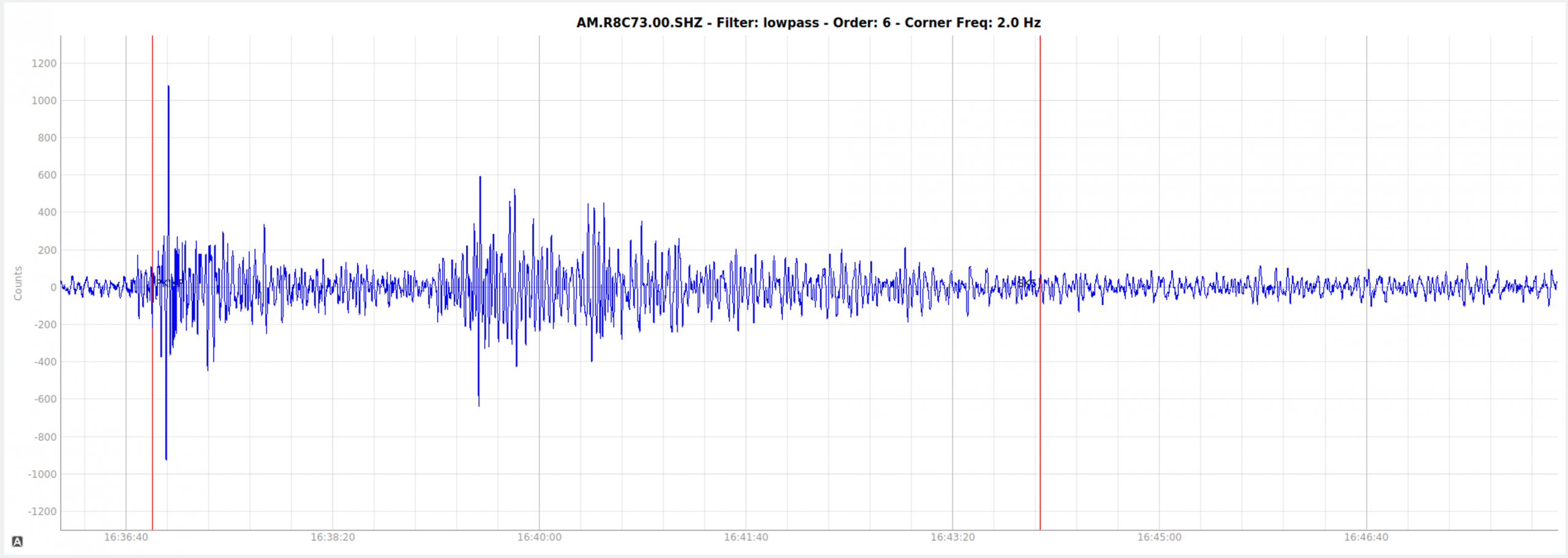
2 Hz lowpass filter of this event.

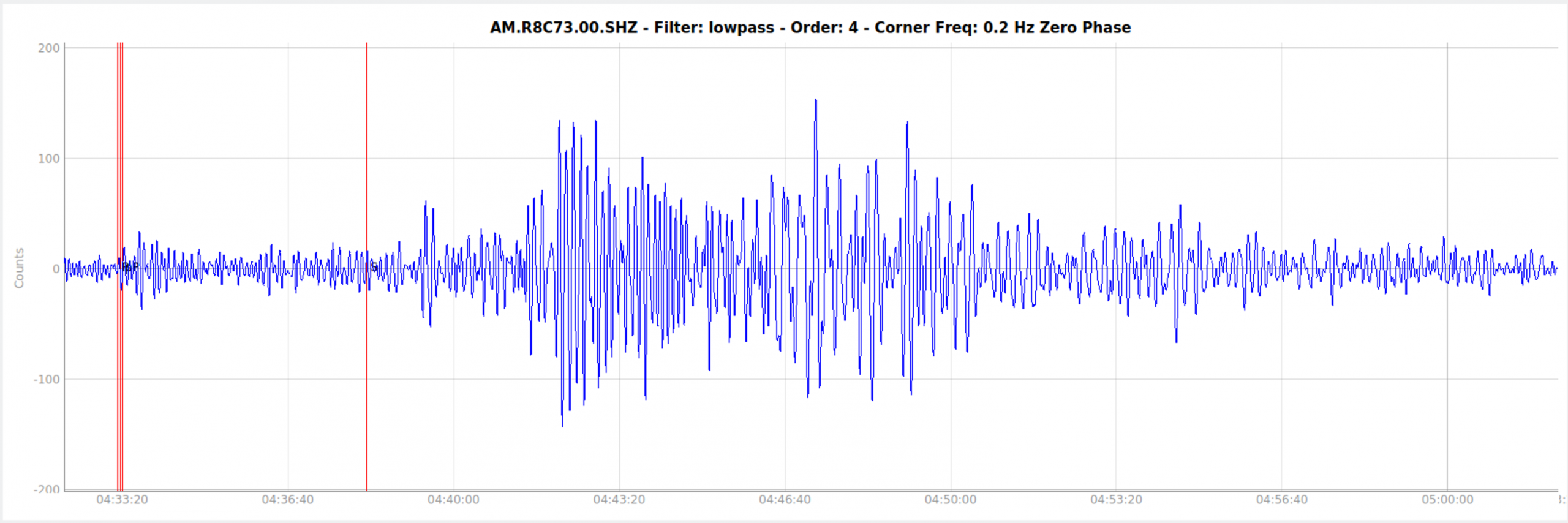
0.2 Hz lowpass filter applied to emphasize the surface waves from the quake.

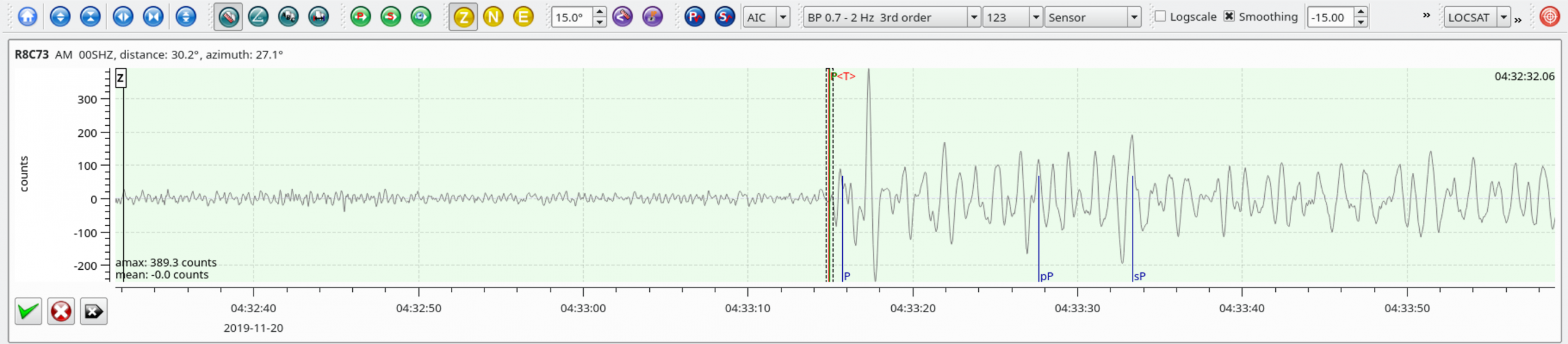
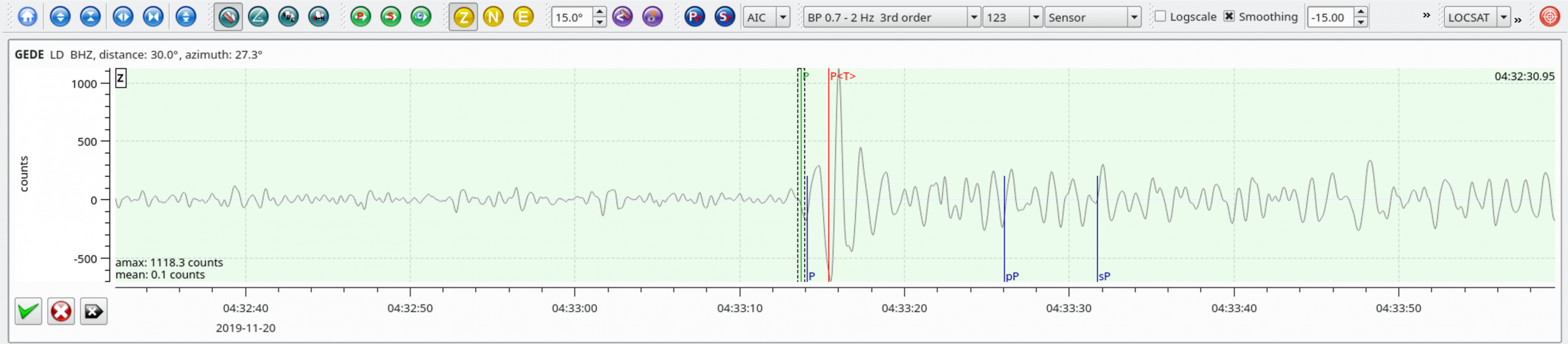
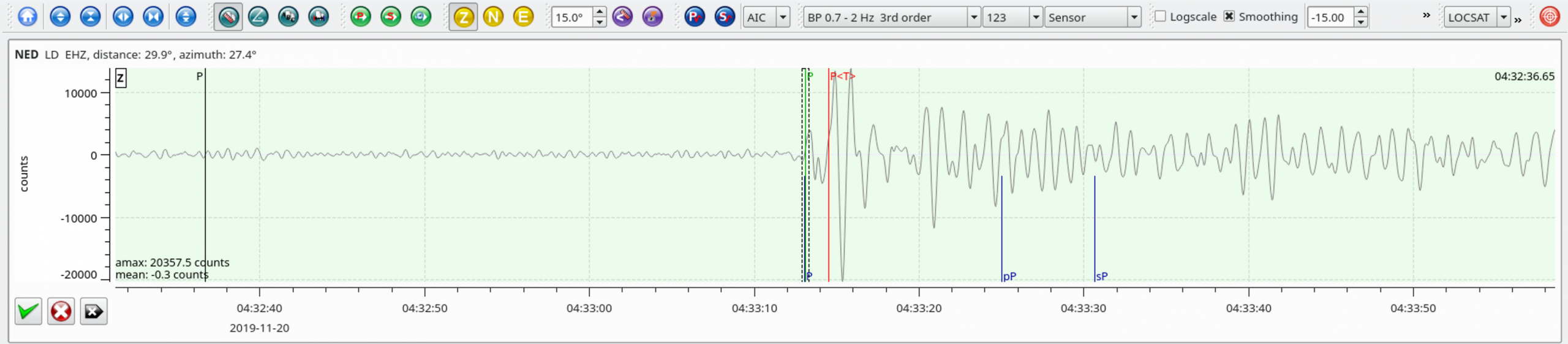
Local SeisComP3 P-wave Arrivals
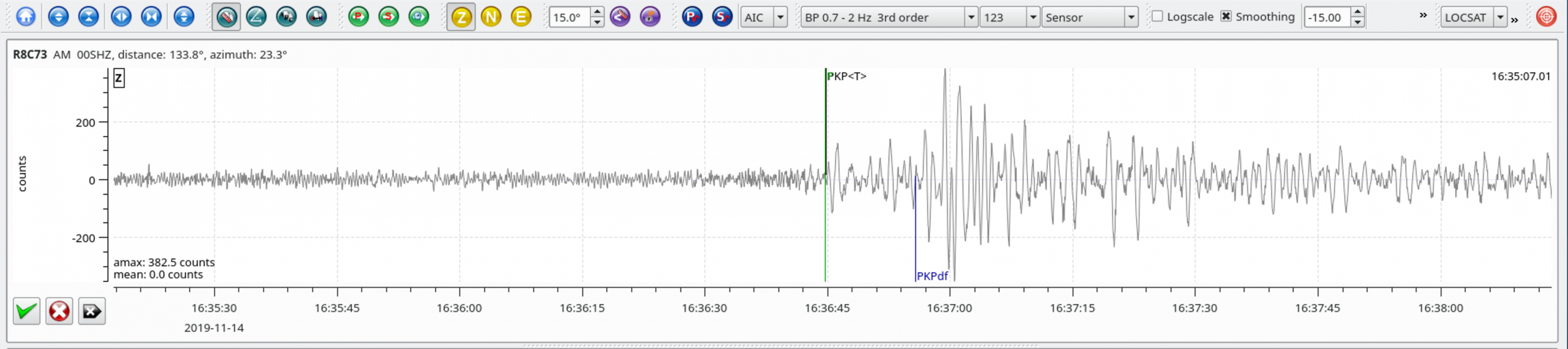
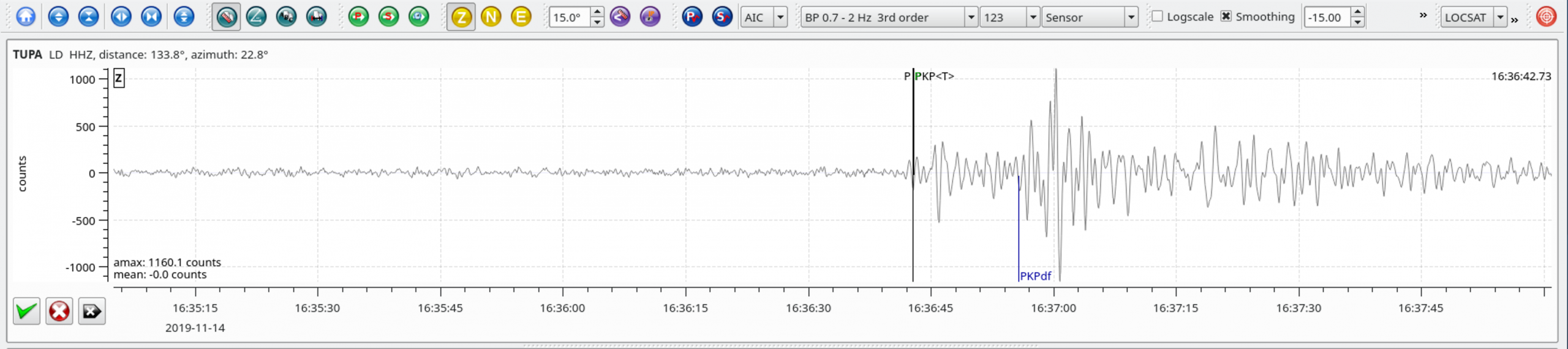
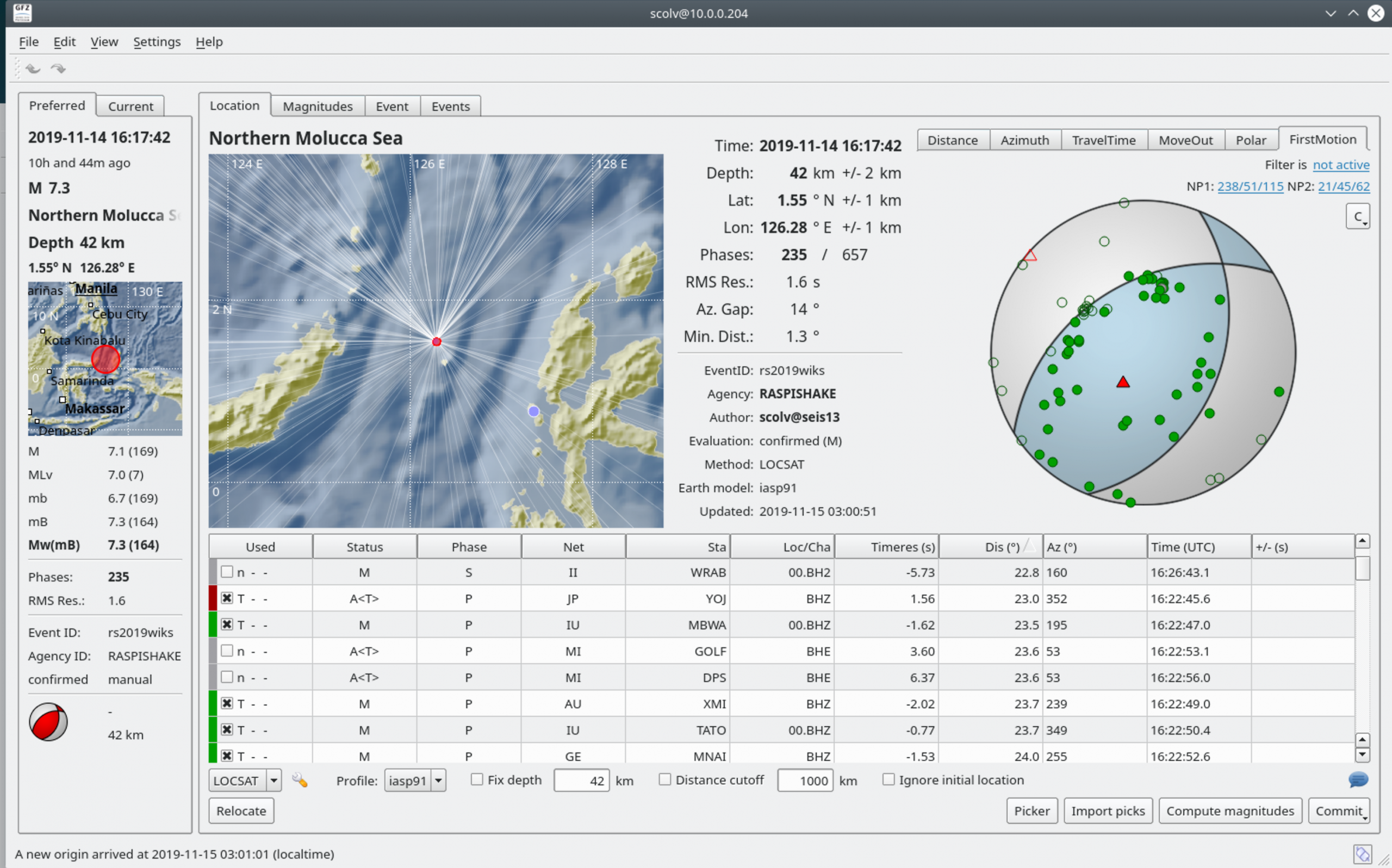
Indonesia – M7.1 – Nov 14, 2019 at 16:17:40 UTC

138km E of Bitung, Indonesia

Latitude Longitude Depth (km) Dist (Deg) Dist (Km) Azimuth
1.629 126.414 33.0 133.9 14,809 23.3


USGS Information Page

Tectonic Summary

The November 14, 2019, M 7.1 earthquake northwest of Kota Ternate, Indonesia, occurred at a depth of ~45 km on or near the interface between the subducted Halmahera slab and the overlying Sunda plate, in the complex plate boundary region of eastern Indonesia, about 300 km to the west of the major plate boundary between the Sunda and Pacific plates. Faulting mechanism solutions for the event indicate that it activated a reverse faulting structure, with a moderate dip towards either the northwest or the southeast, in line with the general trend of earthquakes in the region. Though the earthquake occurred near the boundary between the Halmahera slab and the Sunda plate, this earthquake is not a traditional plate interface event such as those experienced in other subduction zones, since the Halmahera slab is completely subducted and has no surface expression. Slip on a fault aligned with either nodal plane is thus consistent with the tectonic setting of this event.

Tectonics in eastern Indonesia are extremely complex and are dominated by the mostly convergent interactions of the Pacific, Australia, Philippine Sea, and Sunda plates, with some authors labeling the most proximate edge of the Pacific plate here as a separate tectonic block called the Caroline plate. The edges of the Sunda and Australia plates are also often subdivided into smaller tectonic blocks, including the Molucca Sea and Birds Head microplates immediately to the south and east of the November 2019 earthquake, respectively. In this context, the November 2019 event most closely aligns with the boundary between the broader Sunda plate and the Birds Head microplate. At depth beneath this earthquake and the Molucca Sea in general, the inverted-U-shaped Halmahera plate, which has no surface expression, also plays a role in regional tectonics. At the location of the November 14th earthquake, the Sunda and Philippine Sea plates are converging in an east-west direction at a rate of approximately 109 mm/yr.

This area of the Molucca Sea frequently hosts moderate to large earthquakes; nearly 110 M 6+ events have occurred within 250 km of the November 14, 2019, earthquake over the past half century, seven of which were M 7+. The largest, a M 7.5 event in August 1986, struck along the same microplate boundary structure just 25 km to the northeast of the 2019 event. Another M 7.5 event in January 2007 occurred 60 km to the southwest of today’s event. Despite the large number of events in the region, few have been damaging because of their oceanic setting, though the 2007 event previously mentioned did result in 3 shaking related fatalities and minor damage on the nearby island of Sulawesi.

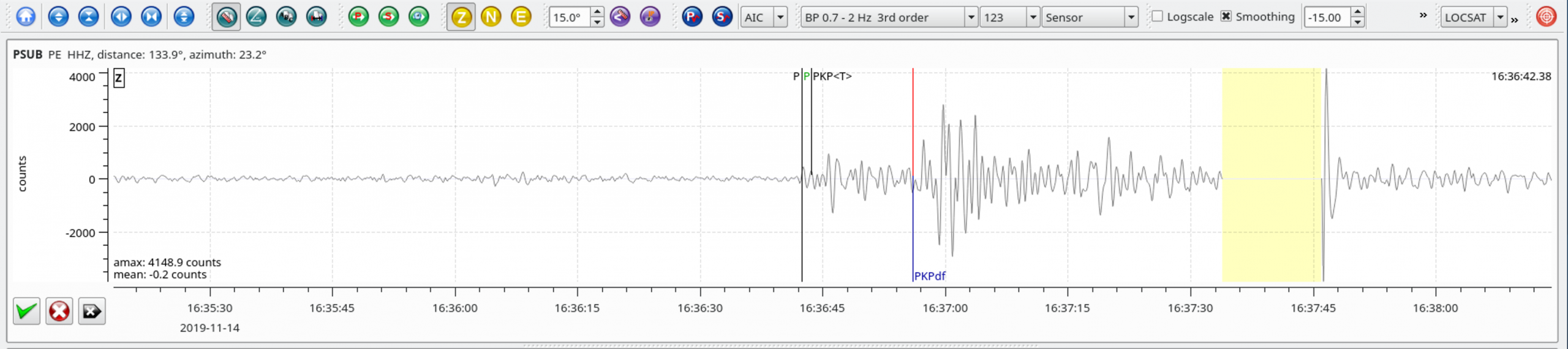
Local SeisComP3 P-wave Arrivals
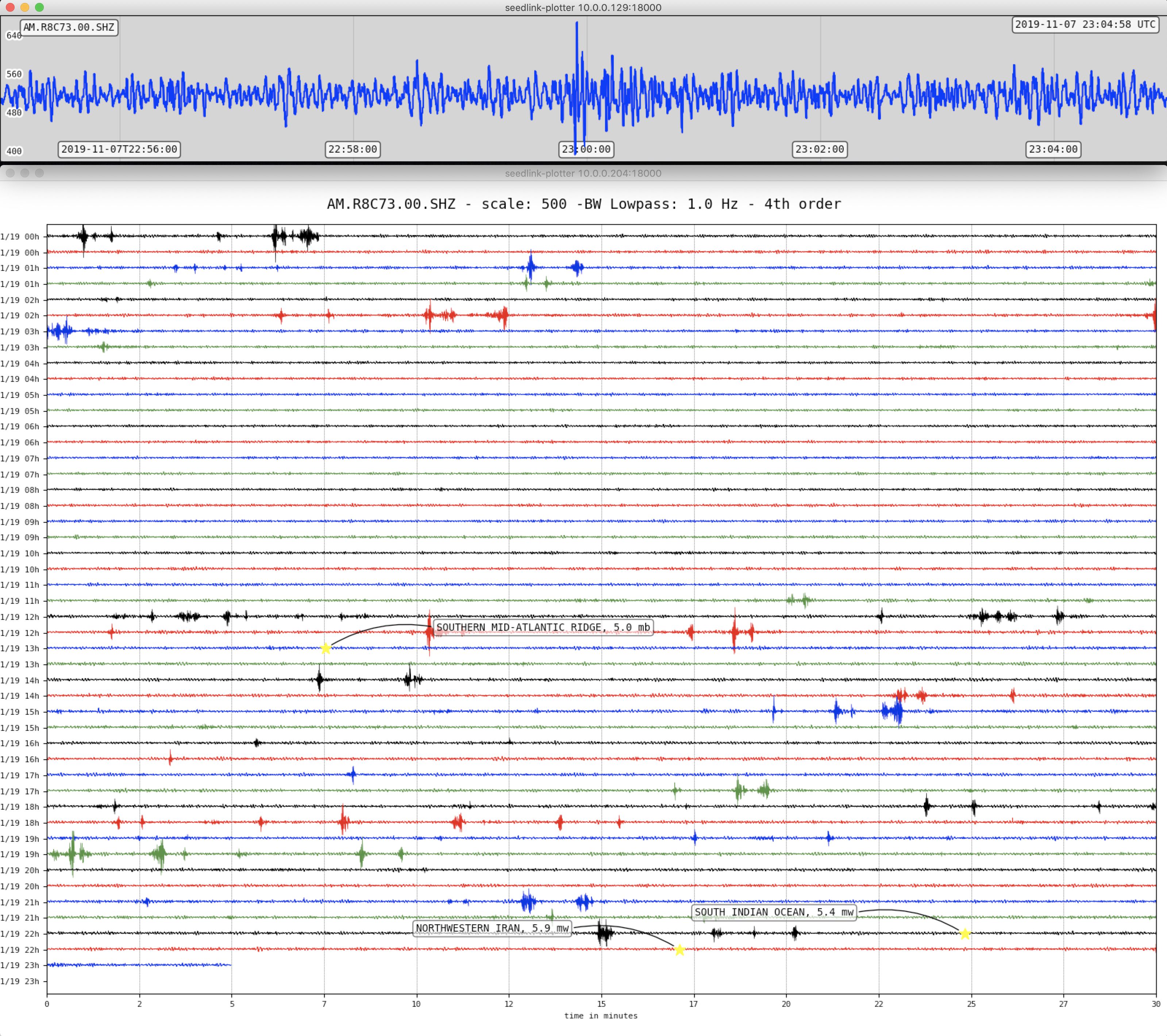
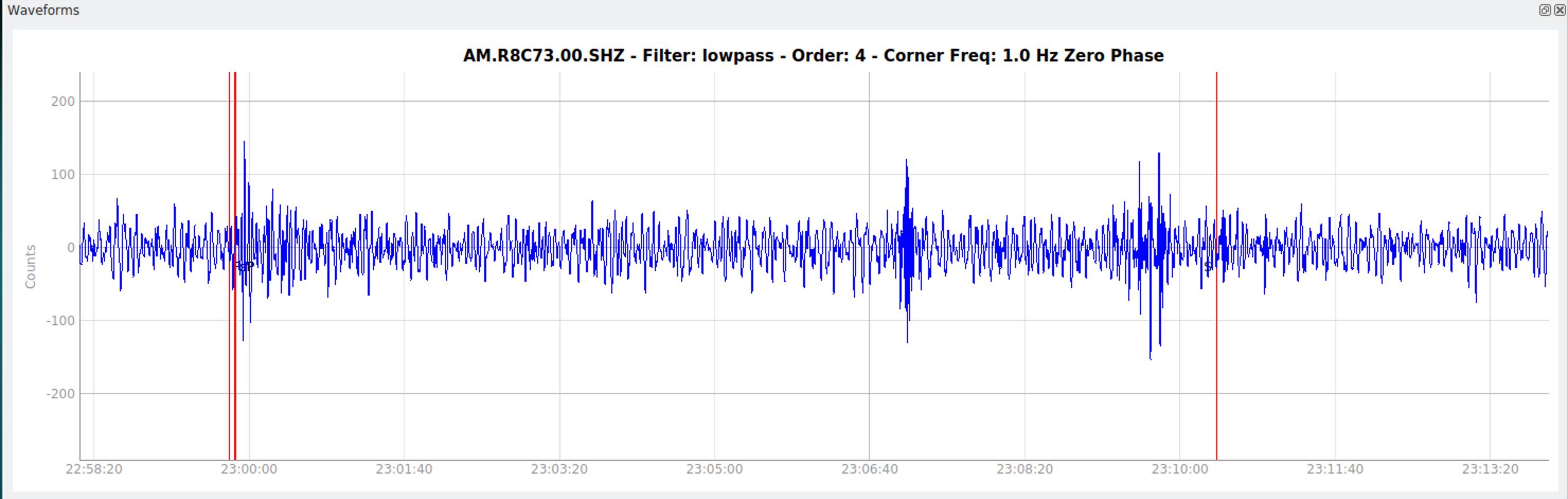
Iran – M5.9 – Nov 7, 2019 at 22:47:05 UTC

57km NE of Hashtrud, Iran

Latitude Longitude Depth (km) Dist (Deg) Dist (Km) Azimuth
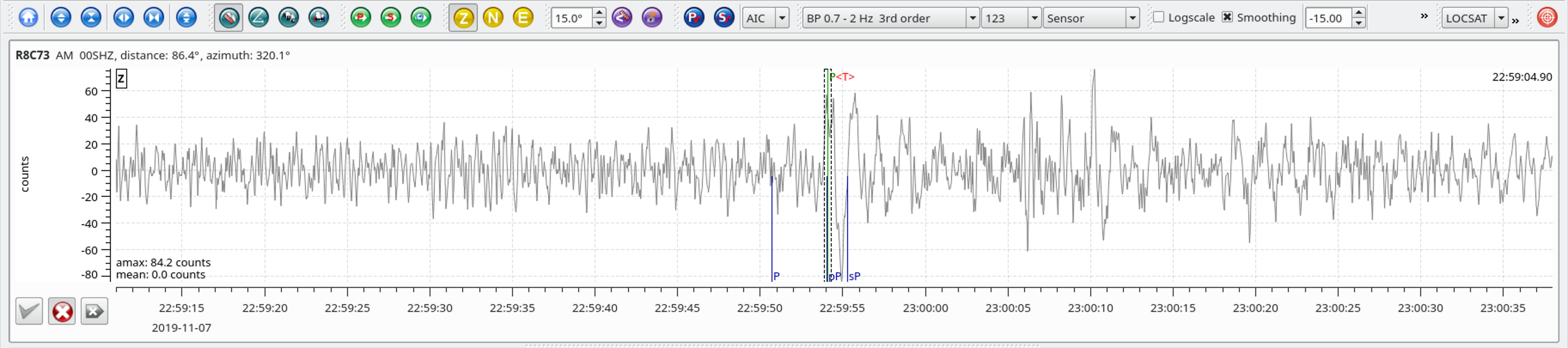
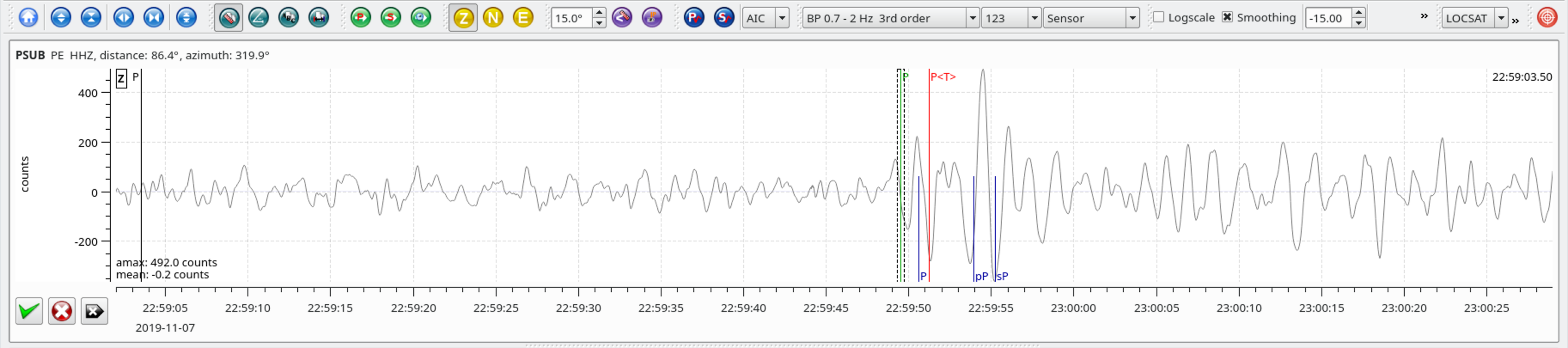
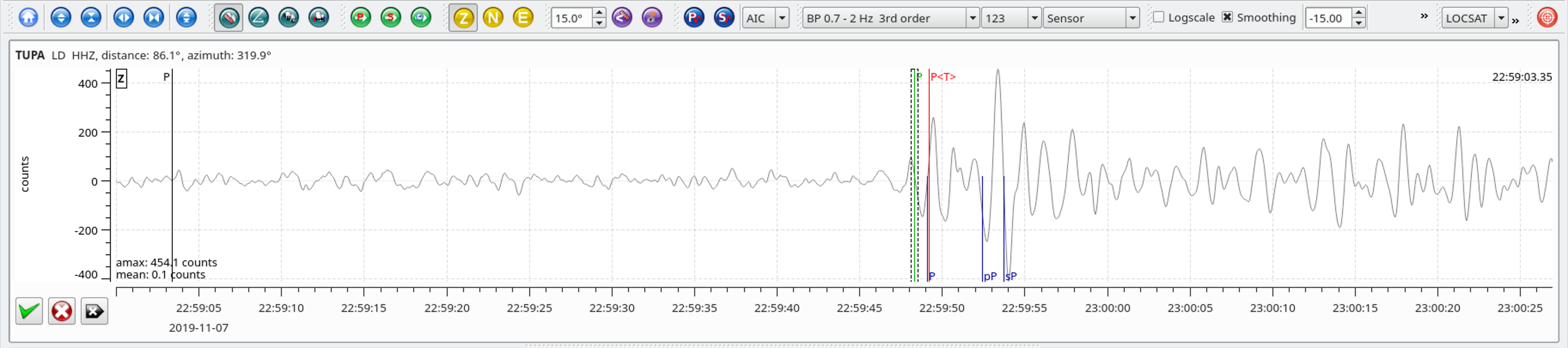
37.808 47.558 q0.0 86.6 9,627 320.1


USGS Information Page

Tectonic Summary

The November 7, 2019, M 5.9 earthquake near Sarab, Iran, occurred as the result of strike-slip faulting in the shallow crust of the Eurasia plate, approximately 250 km to the northeast of the (somewhat diffuse) plate boundary between the Arabia and Eurasia plates. On a broad scale, the seismotectonics of the region near this earthquake are controlled by the collision of these plates. At the location of this event, the Arabia plate converges with Eurasia in a northerly direction at a rate of approximately 27 mm/yr.

North and west of the November 7, 2019, earthquake, tectonics are dominated by both collision and strike-slip faulting in the northern Zagros (Iran) and Bitlis suture zone (eastern Turkey), with strike slip faulting organizing further west onto the East (in southern Turkey) and North (in northern Turkey) Anatolian fault zones. These large, translational fault systems extend across much of central and western Turkey and accommodate the western motion of the Anatolian block as it is being squeezed by the converging Arabia and Eurasia plates. Tectonics east of the November 7, 2019, earthquake are dominated by convergence across the Alborz Mountains of north-central Iran. The November 7, 2019, earthquake occurred in a region of oblique convergence beyond the eastern extent of Anatolian strike-slip tectonics. The focal mechanism solution of this earthquake shows predominantly strike-slip motion but is consistent with the oblique nature of faulting in the surrounding region. Past earthquakes in the vicinity of this event also demonstrate strike-slip focal mechanism solutions

Moderate-to-large earthquakes occur regularly in eastern Turkey and northwest Iran. Six other M6+ events have occurred within 250 km of the November 7, 2019 earthquake over the preceding 40 years. The largest of these was a M 7.4 earthquake in June, 1990, about 190 km to the southeast of todays event. The 1990 event caused close to 50,000 fatalities, and extensive damage throughout the region. A pair of M 6.4 and M 6.2 events on August 11, 2012, 90 km to the northwest of the November 7, 2019 earthquake, resulted in over 300 fatalities and heavy damage in the epicentral region.

Local SeisComP3 P-wave Arrivals