South Sandwich Islands – M7.1 – Dec 11, 2018 at 02:26:32 UTC

Position: 58.598°S 26.466°W – Depth: 164.7 Km

Tectonic Summary

From the USGS Information Page

The December 11, 2018 M 7.1 earthquake in the South Sandwich Islands occurred as the result of oblique-reverse faulting at an intermediate depth in the Scotia subduction zone. The focal mechanism solution indicates slip occurred on either a shallowly dipping fault striking southeast, or on a steep fault striking to the north. At the location of this earthquake, the South America plate moves to the west with respect to the South Sandwich plate at a rate of 73 mm/yr, subducting beneath the South Sandwich Islands at the oceanic trench about 140 km east of this earthquake. The depth and focal mechanism solution of this event indicate it occurred as the result of intraplate faulting within the lithosphere of the subducting South America plate, rather than on the shallower thrust faulting plate boundary between the two plates.

Earthquakes such as this event, with focal depths between 70 and 300 km, are commonly termed “intermediate-depth” earthquakes. Intermediate-depth earthquakes represent deformation within subducted slabs rather than at the shallow plate interface between subducting and overriding tectonic plates. They typically cause less damage on the ground surface above their foci than is the case with similar magnitude shallow-focus earthquakes, but large intermediate-depth earthquakes may be felt at great distance from their epicenters. Earthquakes have been reliably located to depths close to 300 km in this region. Over the previous century, there have been 14 M6+ earthquakes within 250 km of today’s event, and only 1 other M7+ event – a M 7.3 earthquake in September 1961, 75 km to the south of the December 11, 2018 event. None of these earthquakes are known to have caused fatalities, likely because of their remote location far from population centers that might be vulnerable to earthquake shaking.
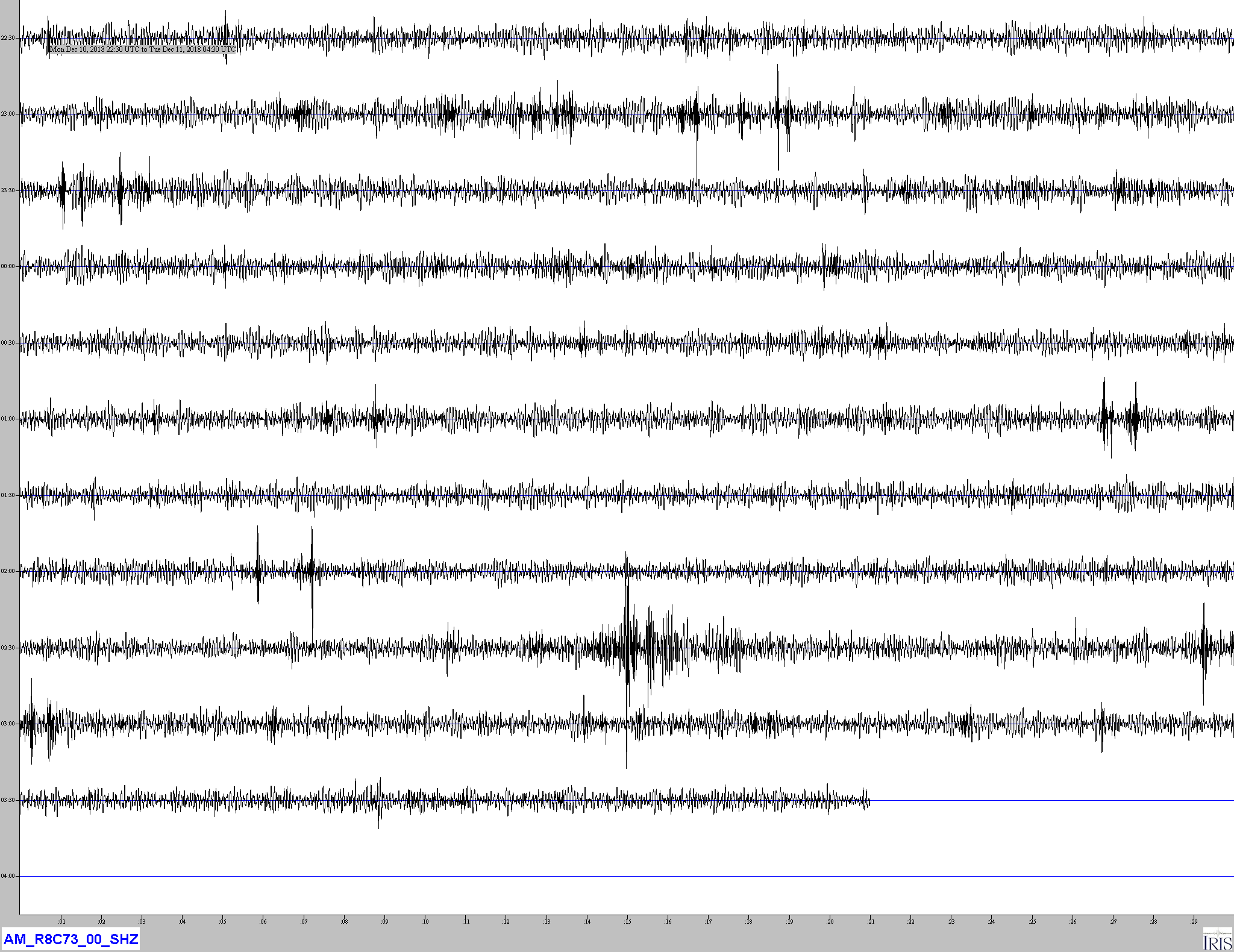


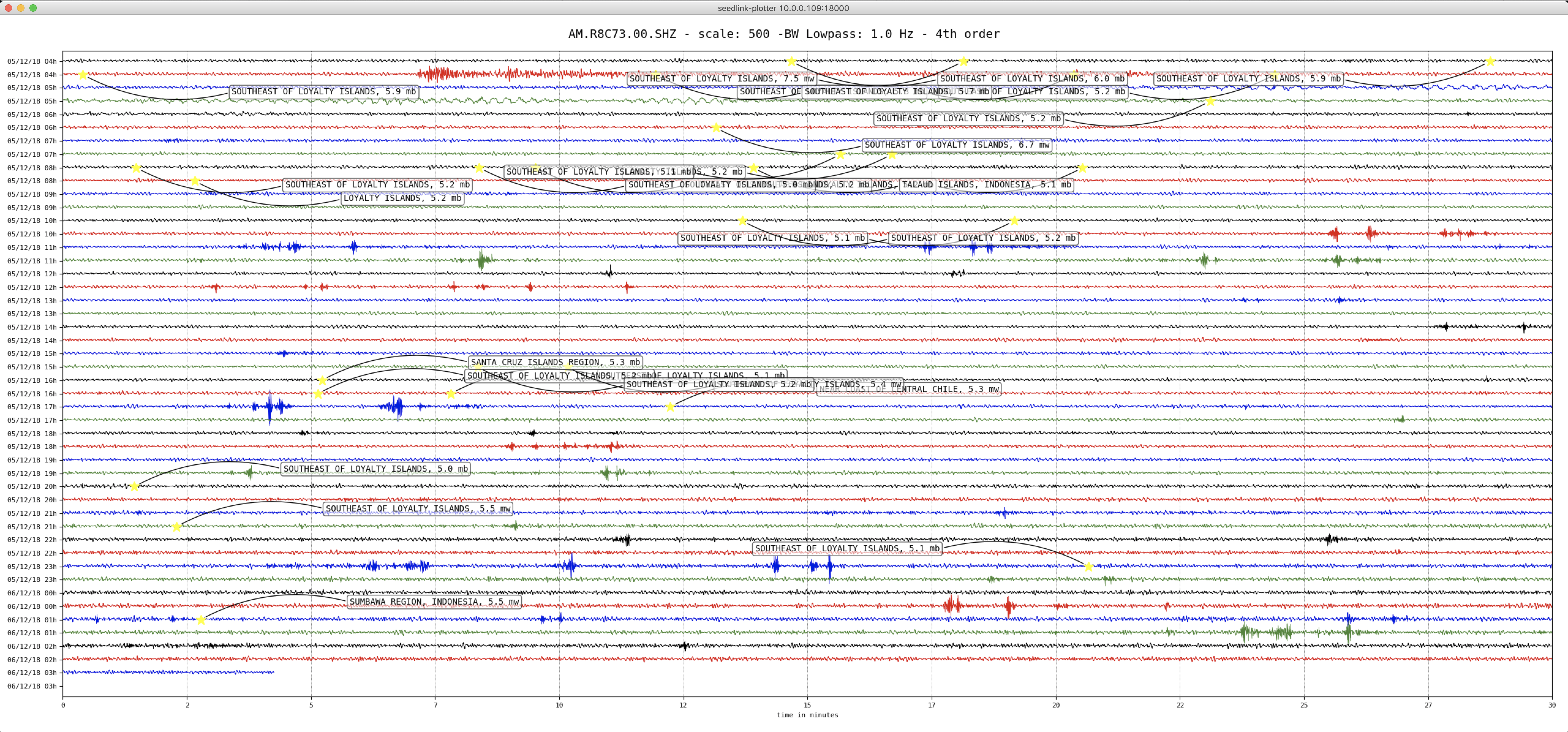
Jamaseis heliocoder trace of AM.RC8C73.00.SHZ. 
Distance: 106.6 Deg. 11,837 Km
Azimuth: 322.7 Deg.
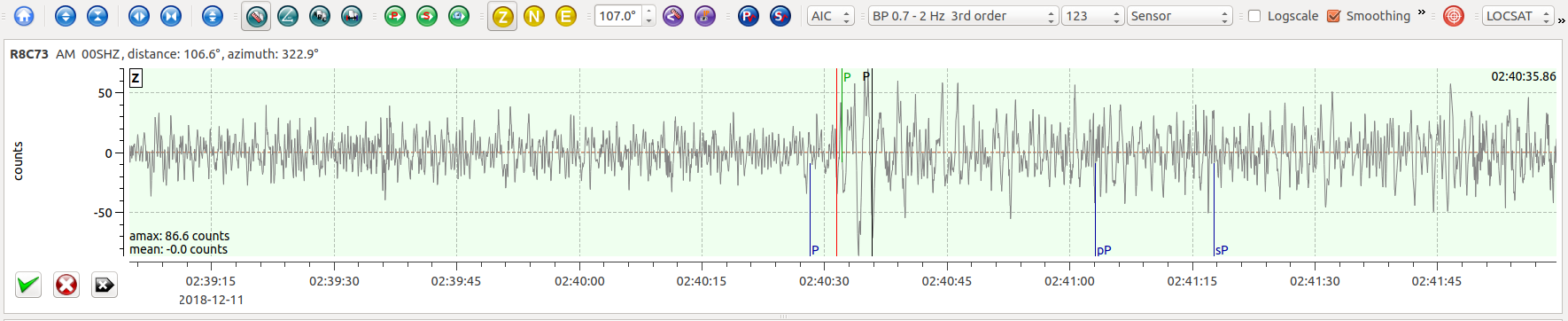
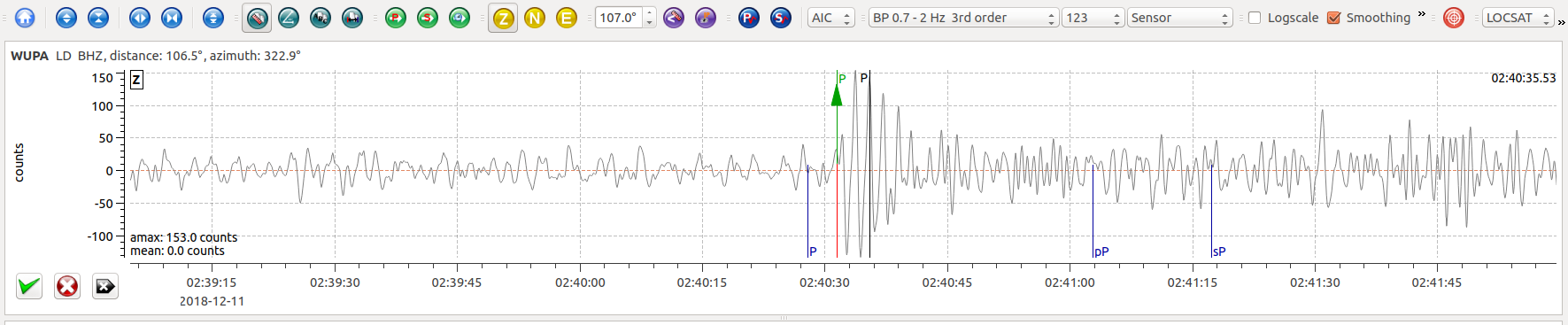
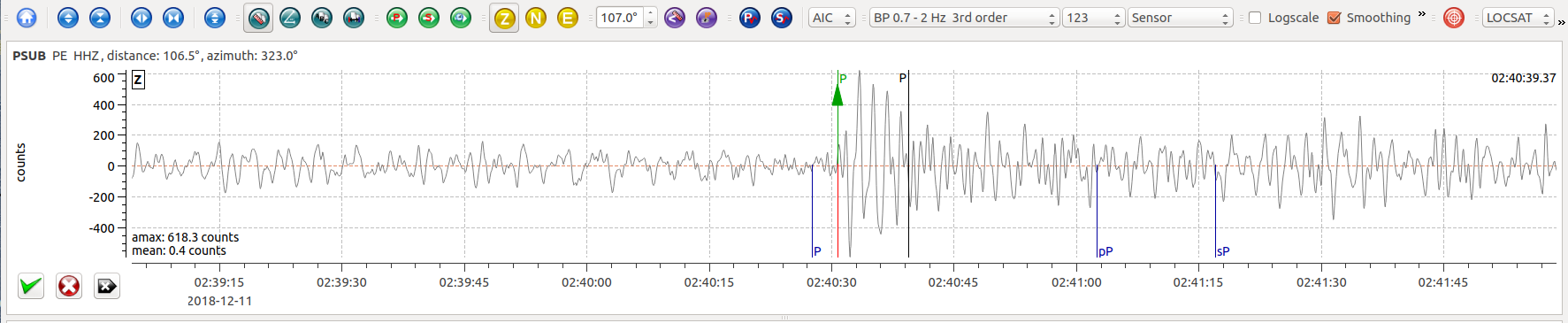
SeisComP3 traces for AM.R8C73.00.SHZ (Exton PA),  LD.WUPA.BHZ (West Chester University, West Chester PA), and PE.PSUB.HHZ (Penn State Delaware County Campus, Media PA) showing the P wave arrivals.
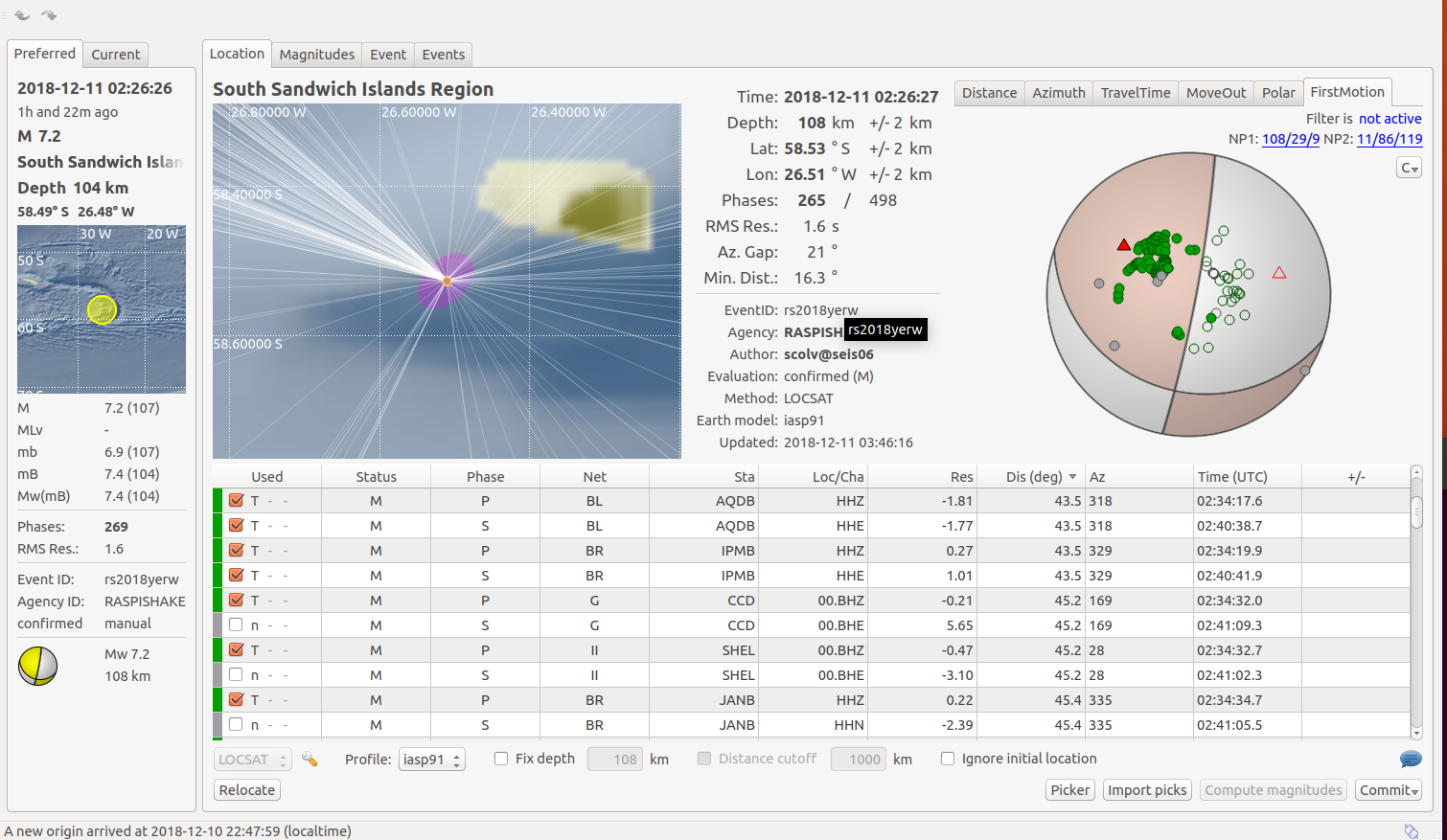
SeisComP3 display shwoing the focal plane solution for this Quake

New Caledonia – M7.5 – Dec 5, 2018 at 04:18:08 UTC

Position: 21.969°S 169.446°E – Depth: 10 km

Tectonic Summary

From the USGS Information Page:

The December 5, 2018, M 7.5 earthquake east of New Caledonia in the southwest Pacific Ocean occurred as the result of shallow normal faulting within the oceanic crust of the Australia plate, just west of the South New Hebrides Trench which marks the plate boundary between the Australia and Pacific plates in this region. Focal mechanism solutions indicate faulting occurred on a moderately dipping fault striking either to the northwest or to the southeast. At the location of this earthquake, the Australia plate moves towards the east-northeast with respect to the Pacific at a rate of approximately 78 mm/yr. At the South New Hebrides Trench, Australia lithosphere converges with and sinks beneath the Pacific plate, descending into the mantle and forming the New Hebrides/Vanuatu subduction zone, stretching from New Caledonia in the south to the Santa Cruz Islands in the north, a distance of about 1,600 km. The December 5, 2018, earthquake occurred very close to this trench, and just to its west, in the tectonic region sometimes known as the “outer rise” where the subducting plate begins flexing (extending) before sinking into the mantle. The location, depth, and focal mechanism solution of this earthquake are all consistent with the event occurring as a result of intraplate faulting in this outer rise region.

While commonly plotted as points on maps, earthquakes of this size are more appropriately described as slip over a larger fault area. Normal faulting events of the size of the December 5, 2018 earthquake are typically about 75×30 km in size (length x width).

The December 5, 2018 earthquake is sixth M 6+ earthquake to occur in this region over the past three months, and is part of an active sequence of events that began on August 29th, 2018 with a M 7.1 interplate thrust faulting earthquake to the east of the South New Hebrides Trench and about 70 km to the east of the December 5, 2018 earthquake. Over this time period, about 140 M 4+ earthquakes have been recorded in this region by the USGS, most thrust faulting earthquakes to the east of the plate boundary. Today’s earthquake was preceded by 4 minutes by a M 6.8 foreshock, about 13 km further west of the oceanic trench. A similarly active sequence occurred between October-December 2017, just to the north of the 2018 events and predominantly in the Outer Rise region. The 2017 sequence involved upwards of 350 M4+ events, including seven M6+ (and 1 M7+) events.

The Loyalty Islands region is very active seismically, and the region within 250 km of the December 5, 2018 earthquake has hosted 24 other M 7+ earthquakes over the preceding century. The largest was a M 8.1 earthquake in September 1920, which was located about 230 km to the northwest of today’s event, just to the east of the oceanic trench. Five of these M 7+ earthquakes have occurred to the west of the oceanic trench, including a M 7.7 earthquake in May 1995, 125 km to the southeast, a M 7.1 earthquake in January 2004, 40 km to the southeast, and the aforementioned M7.0 earthquake in November 2017, 70km to the northwest. None of these are known to have caused any damage or fatalities. The January 2004 M 7.1 earthquake was also part of an active sequence of about 270 events, beginning in December 2003. That sequence included both interplate thrust faulting earthquakes (the largest event in the sequence was a M 7.3 thrust faulting earthquake on December 27, 2003) and normal faulting earthquakes to the west of the oceanic trench. Between December 25, 2003, and January 3, 2004, 12 earthquakes of M 6+ occurred. The 2003-2004 sequence eventually died down in early-mid February of 2004.

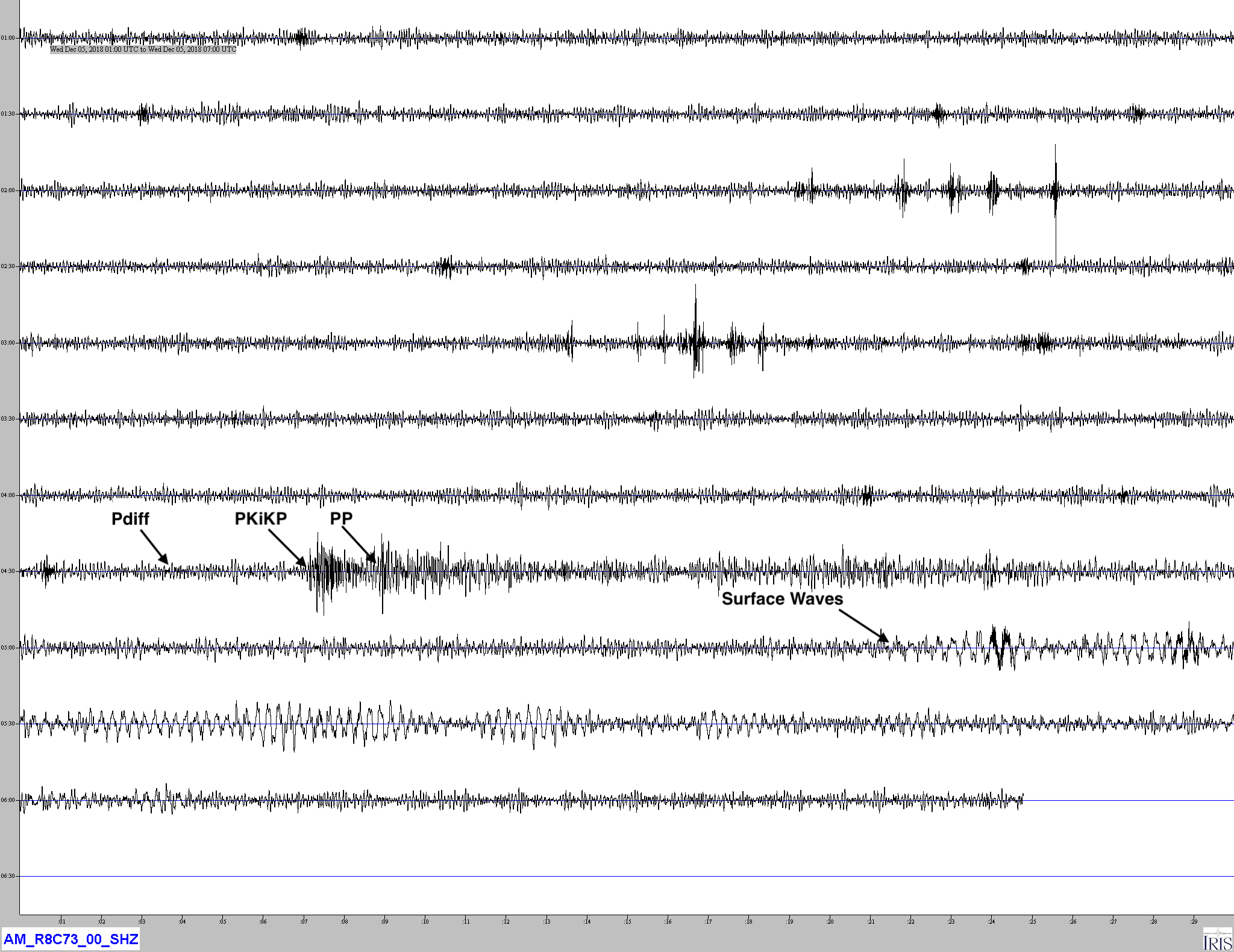
Jamaseis heliocoder trace of AM.RC8C73.00.SHZ. Significant wave arrivals are annotated
Distance: 122 Deg. 13,645 km
Azimuth: 55 Deg.

SeisComP3 traces for AM.R8C73.00.SHZ (Exton PA) and PE.PSUB.HHZ (Media PA) showing the PKPdf wave arrival.

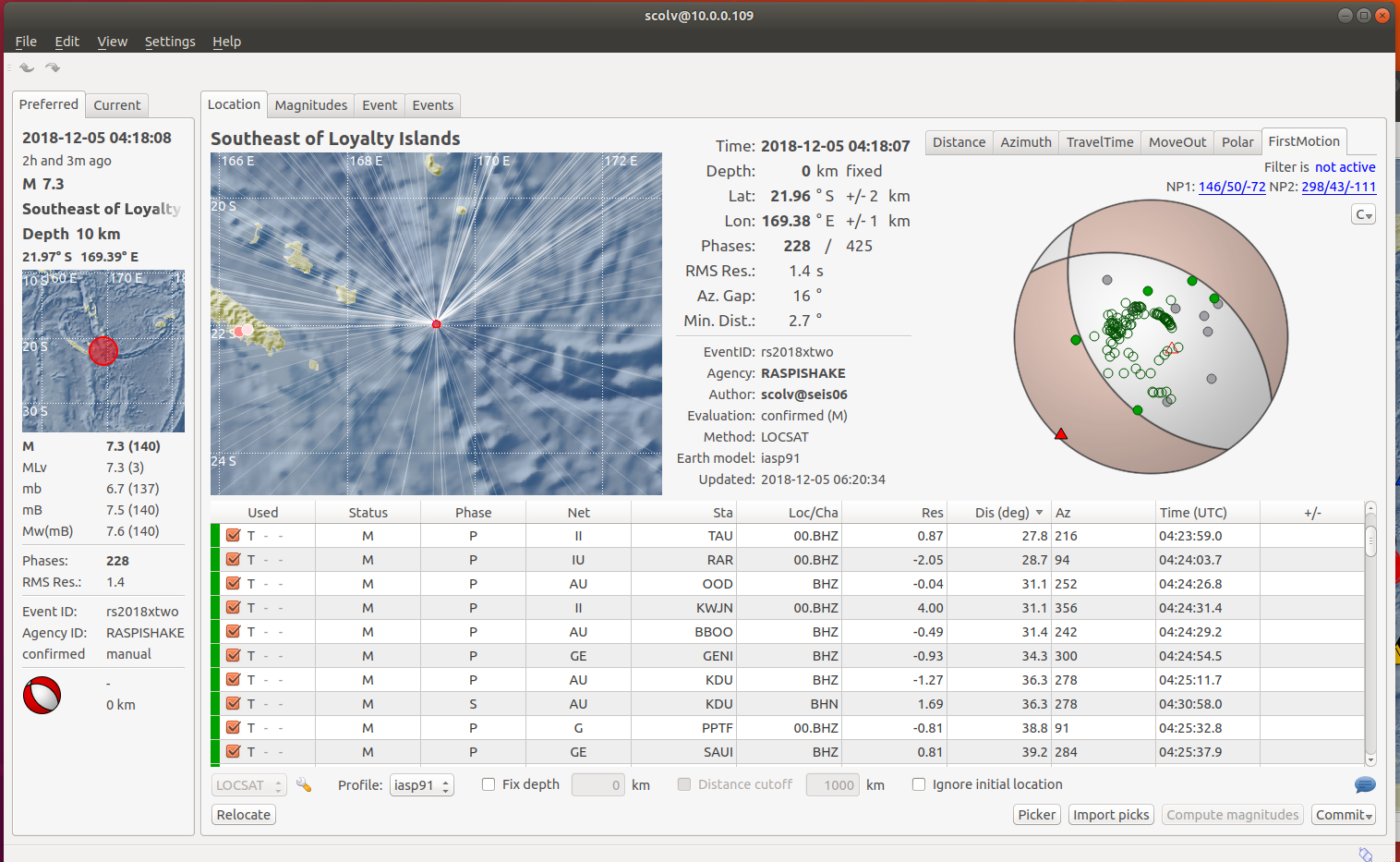
Fault Plane Solution calculated by SeisComP3.

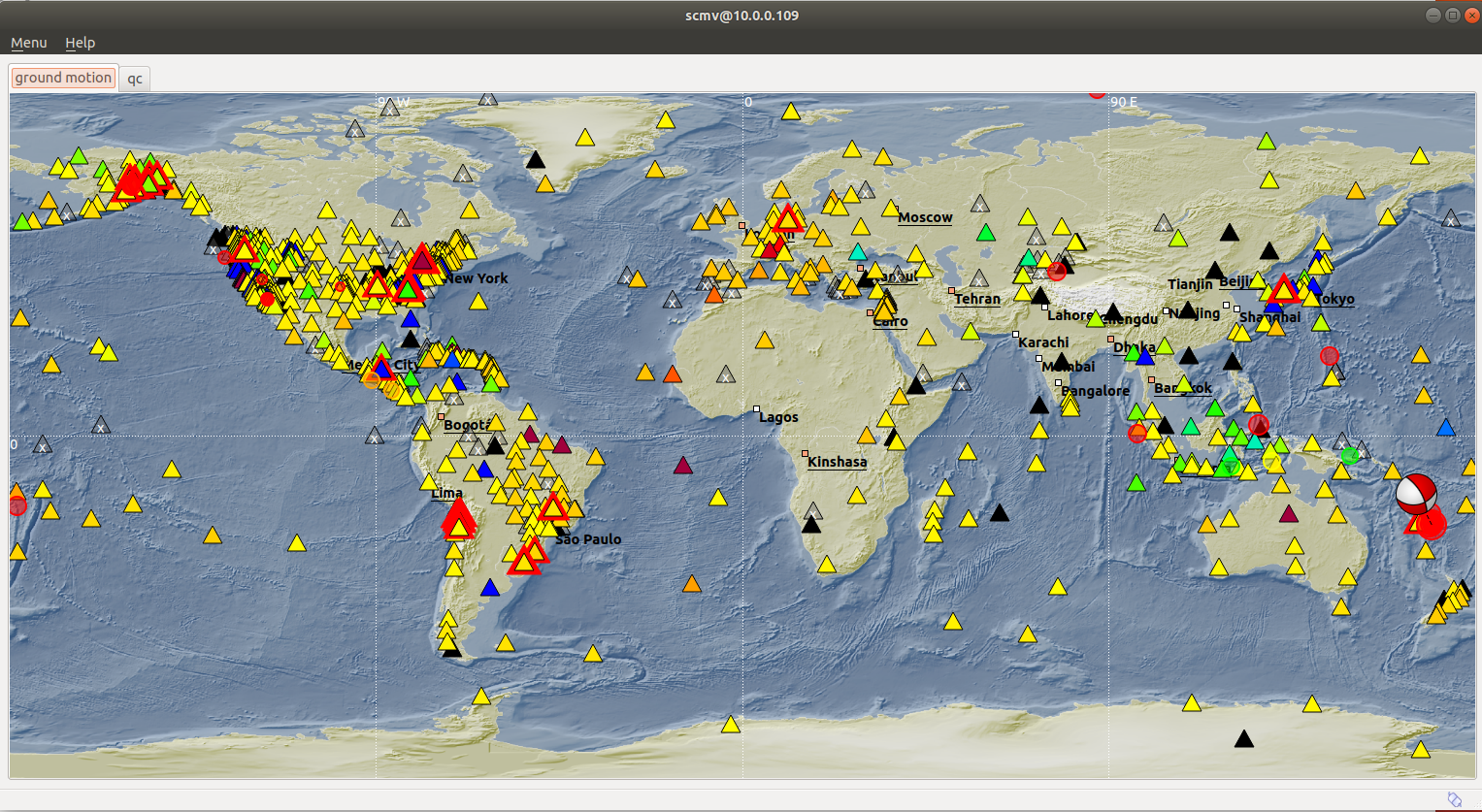
SeisComP3 scmv (map view) display showing high ground motion (yellow, orange, and red) from seismometers worldwide caused by this earthquake.

There were a large number of aftershocks seen on this heliocorder trace.

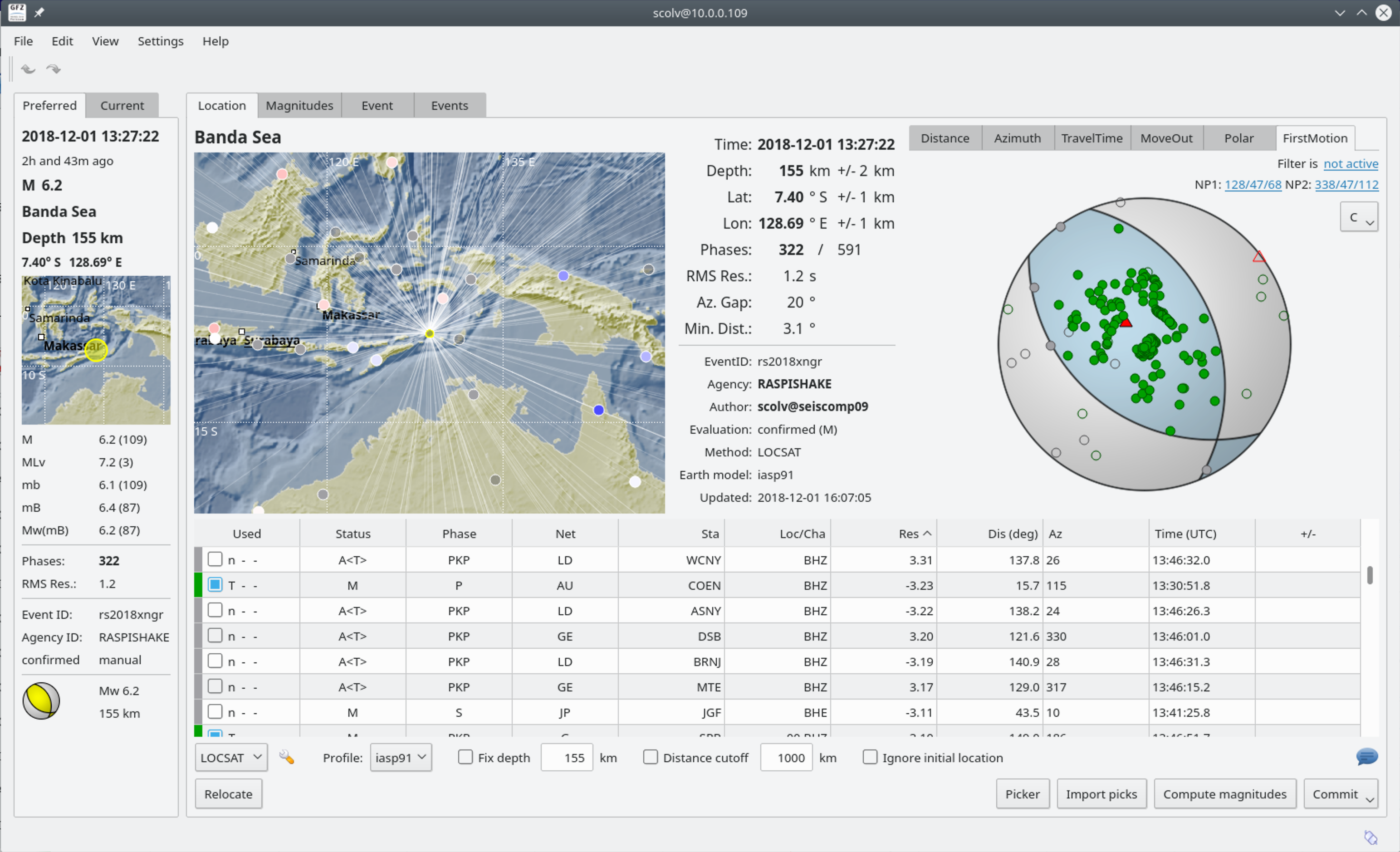
Banda Sea Indonesia – M6.3 – Dec 1, 2018 at 13:27:21 UTC

Position: 7.403°S 128.710°E – Depth: 140.6 km

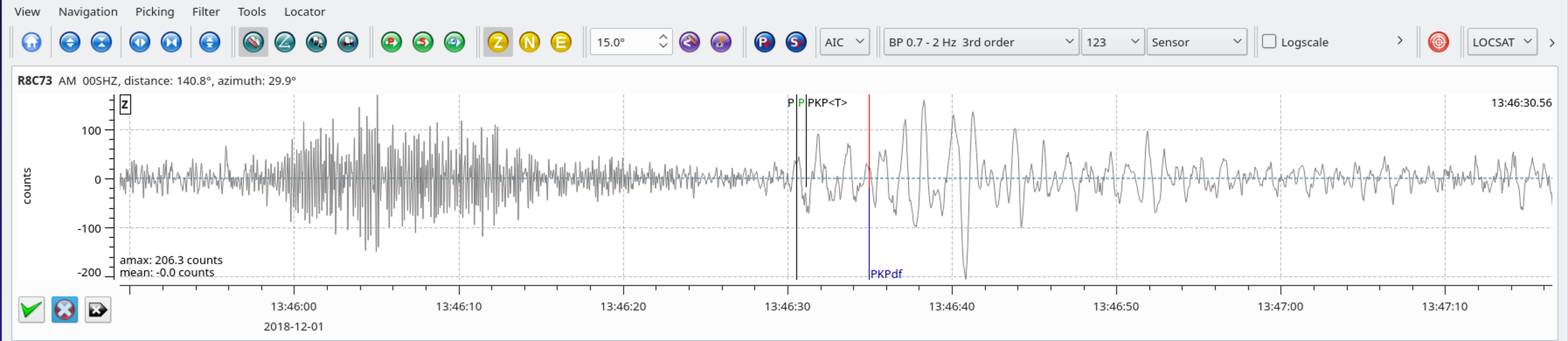
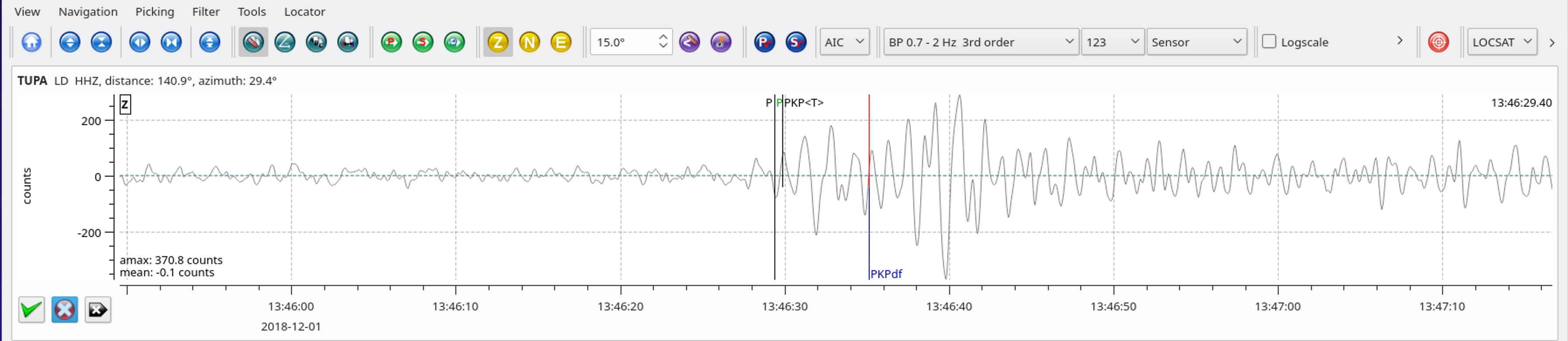
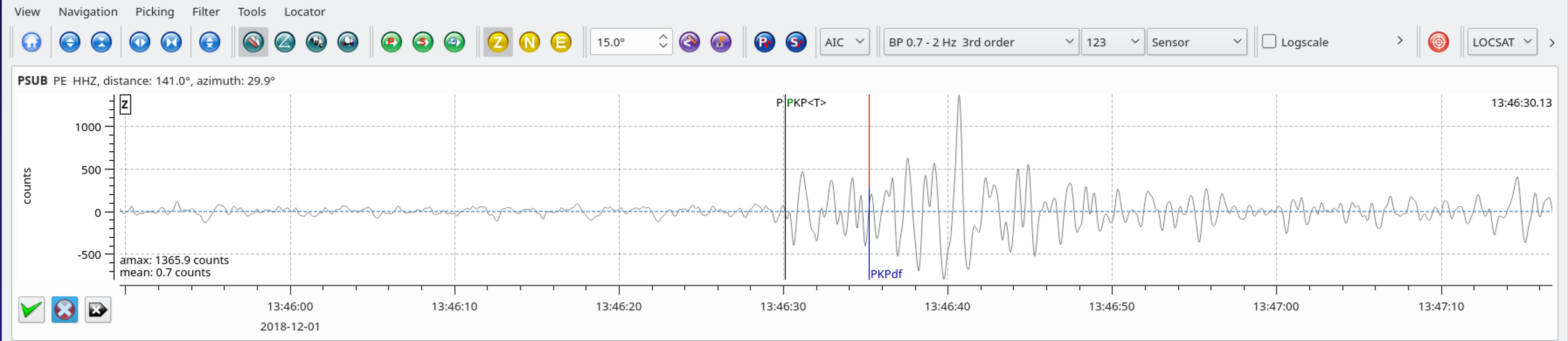
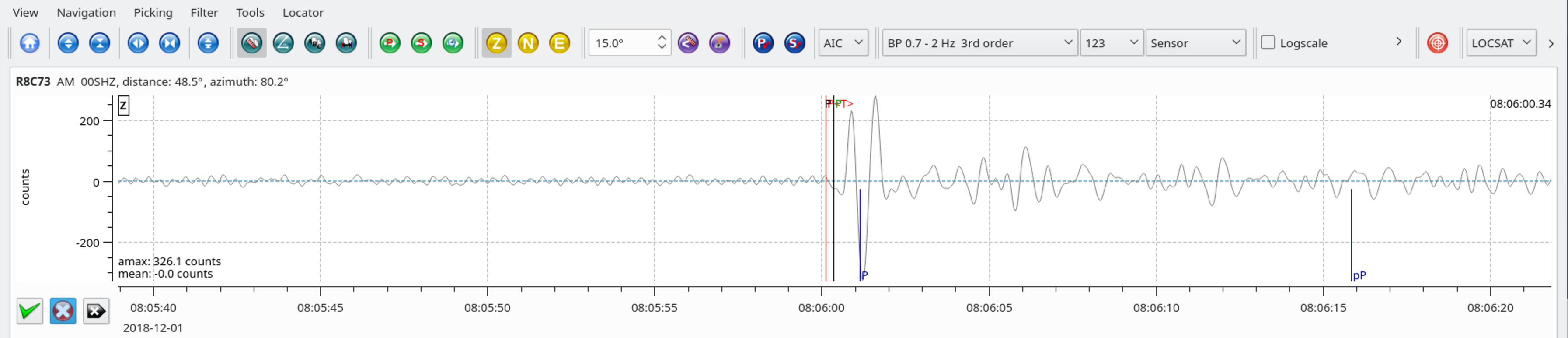
SeisComP3 traces for AM.R8C73.00.SHZ (Exton PA), LD.TUPA.HHZ (Temple University Ambler Campus, Ambler PA), and PE.PSUB.HHZ (Penn State Brandywine Campus, Media PA) showing the P wave arrivals.

Distance: 140.7 Deg – 15,619 Km

Azimuth: 29.8 Deg

SeisComP3 scolv screen showing the fault plane solution for this quake.

Anchorage Alaska – M5.2 – Dec 1, 2018 at 07:57:22 UTC

Position: 61.358°N 149.994°W – Depth: 39 km

USGS Information Page

This earthquake is one of the many aftershock from the November 30 7.0 quake. 

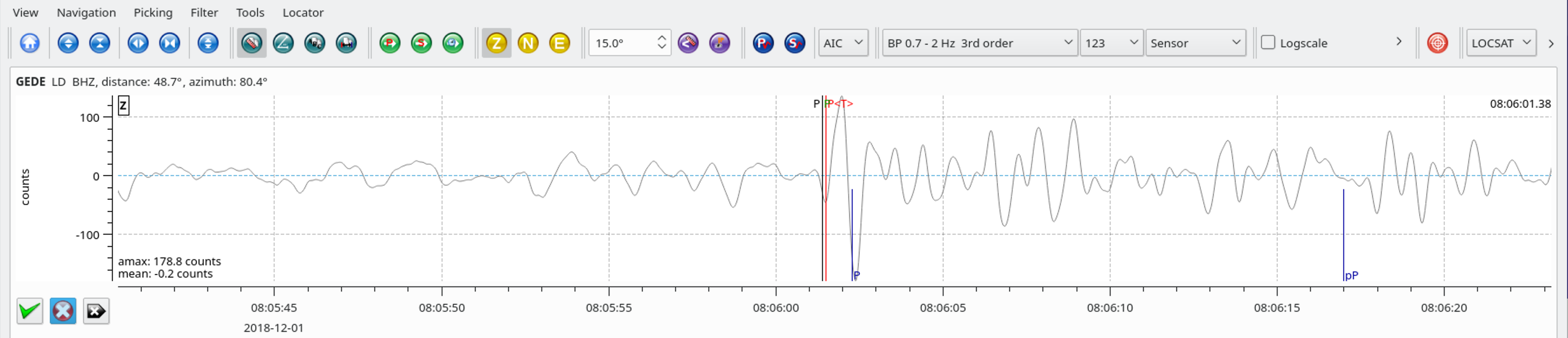
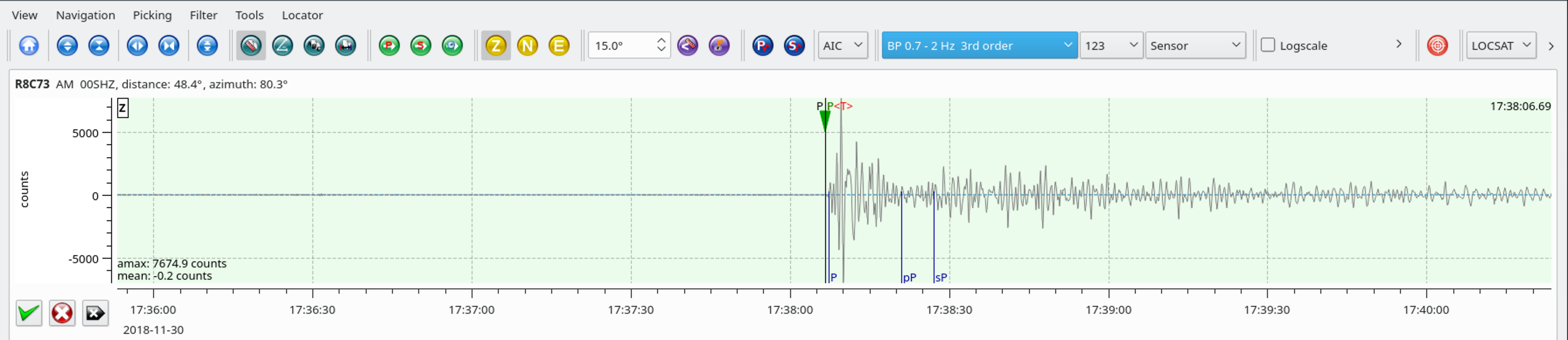
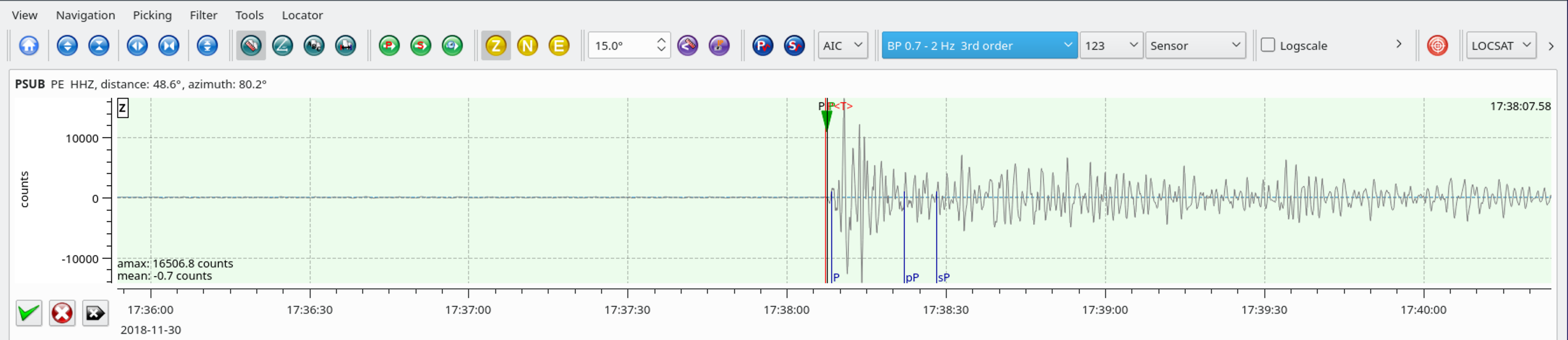
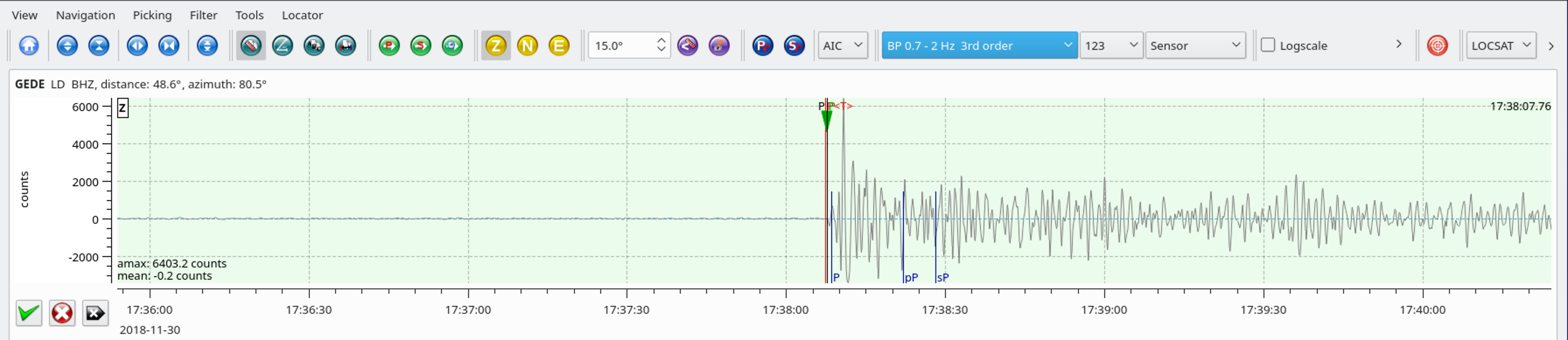
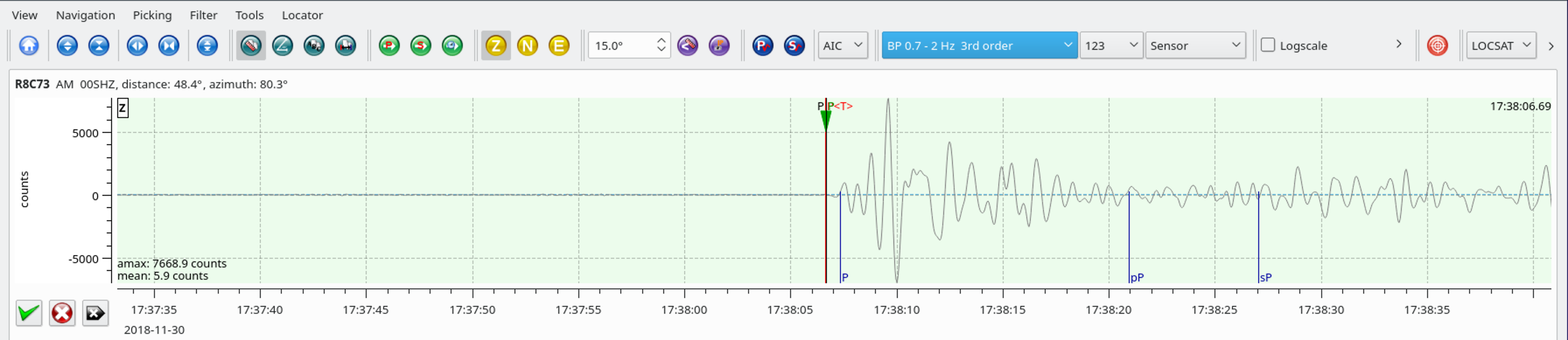
SeisComP3 traces for AM.R8C73.00.SHZ (Exton PA) and LD.GEDE.BHZ (Greenville DE showing the P wave arrivals.

Distance: 48.6 Deg – 5401.8 Km

Azimuth: 80.1 Deg

Anchorage Alaska – M7.0 – Nov 30, 2018 at 17:29:28 UTC

Position: 61.340°N 149.937°W – Depth: 10.9 km

Tectonic Summary

From the USGS information page

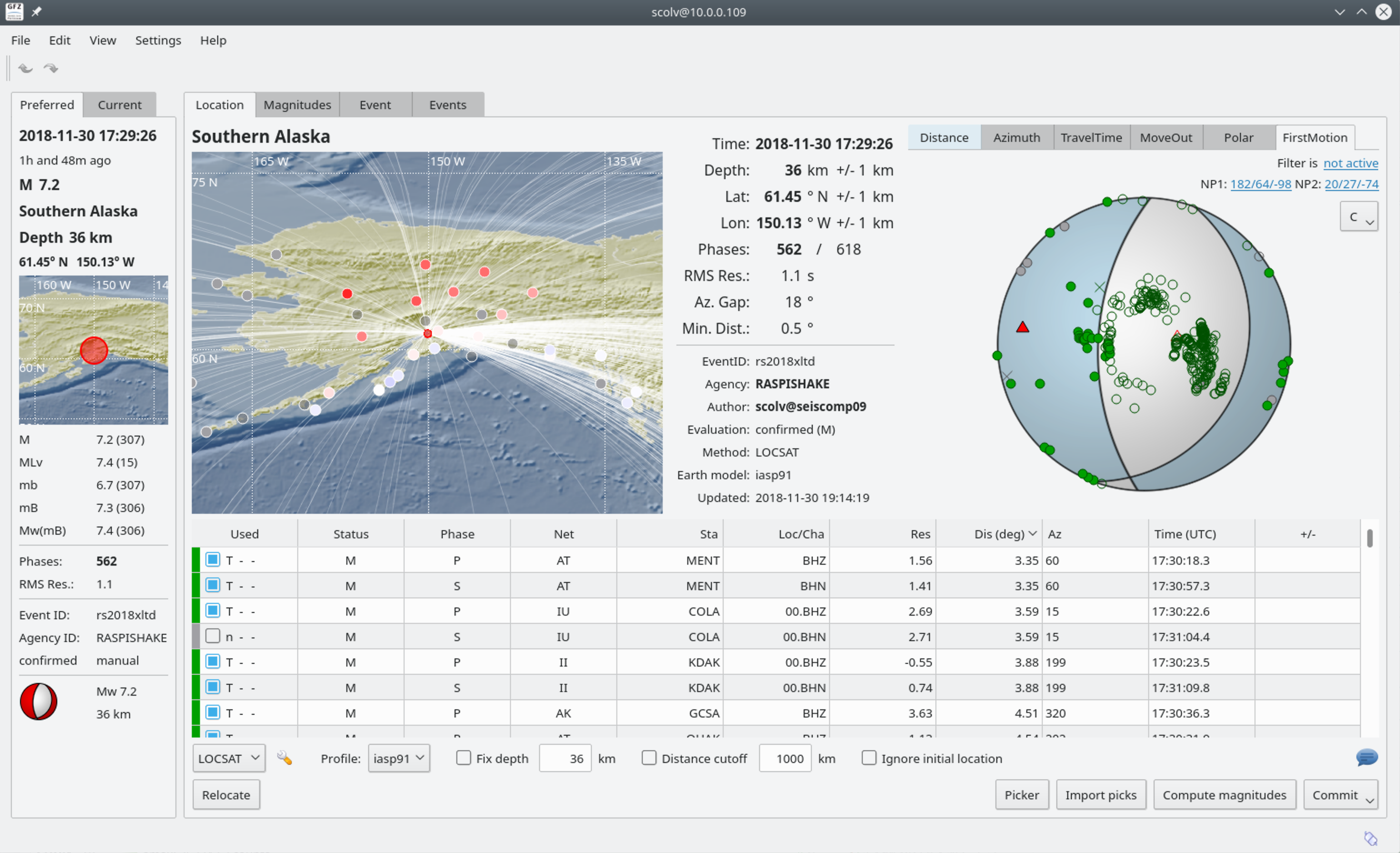
The November 30, 2018, Mw 7.0 earthquake near Anchorage, Alaska, occurred as the result of normal faulting at a depth of about 40 km. Focal mechanism solutions for the event indicate slip occurred on a moderately dipping fault striking north-south (dipping either to the east at about 30 degrees, or the west at about 60 degrees). At the location of this earthquake, the Pacific plate is moving towards the northwest with respect to the North America plate at about 57 mm/yr, subducting beneath Alaska at the Alaska-Aleutians Trench, approximately 150 km south-southeast of this event. The location and mechanism of this earthquake indicate rupture occurred on an intraslab fault within the subducting Pacific slab, rather than on the shallower thrust-faulting interface between these two plates.

Earthquakes are common in this region. Over the past century, 14 other M 6+ earthquakes have occurred within 150 km of the November 30, 2018 event. Two of these – a M 6.6 earthquake in July 1983 and a M 6.4 event in September 1983 – were at a similarly shallow depth and caused damage in the region of Valdez. The M 9.2 great Alaska earthquake of March 1964, was an interface thrust faulting earthquake that ruptured over several hundred kilometers between Anchorage and the Alaska-Aleutians trench, and to the southwest.

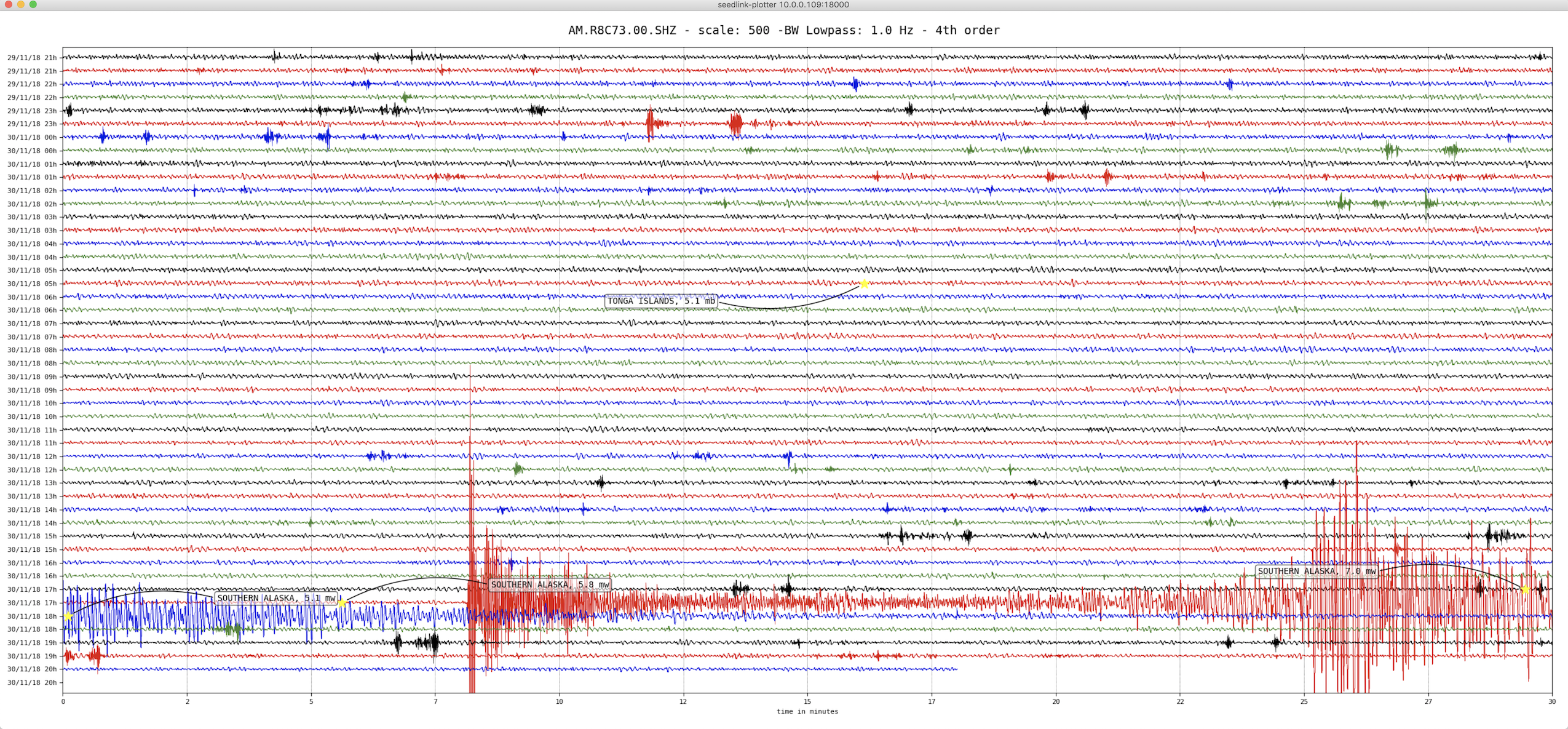
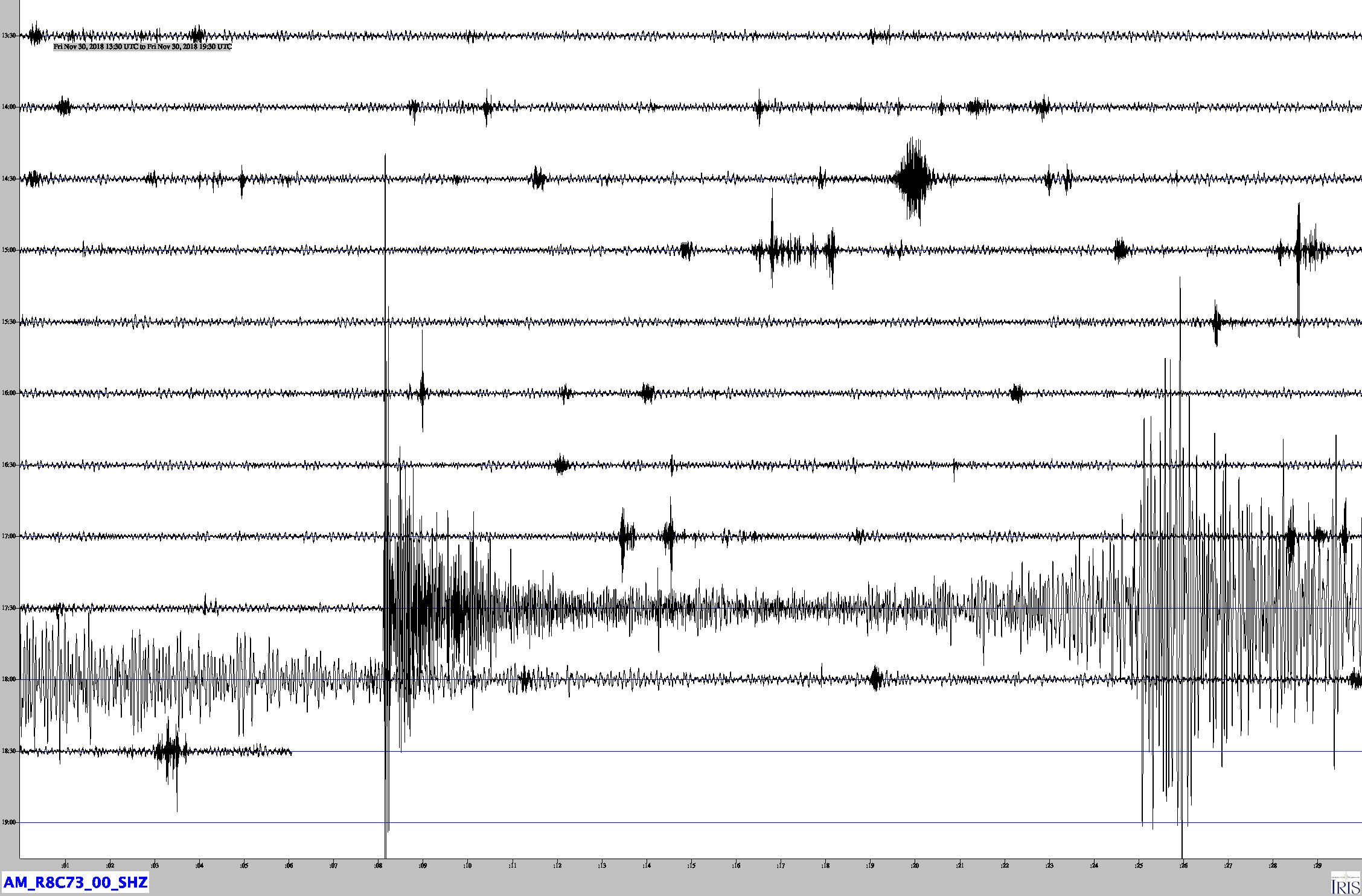
Heliocoder trace of AM.RC8C73.00.SHZ in Exton PA
Distance: 48.6 Deg. 5,399 km
Azimuth: 80.2 Deg.

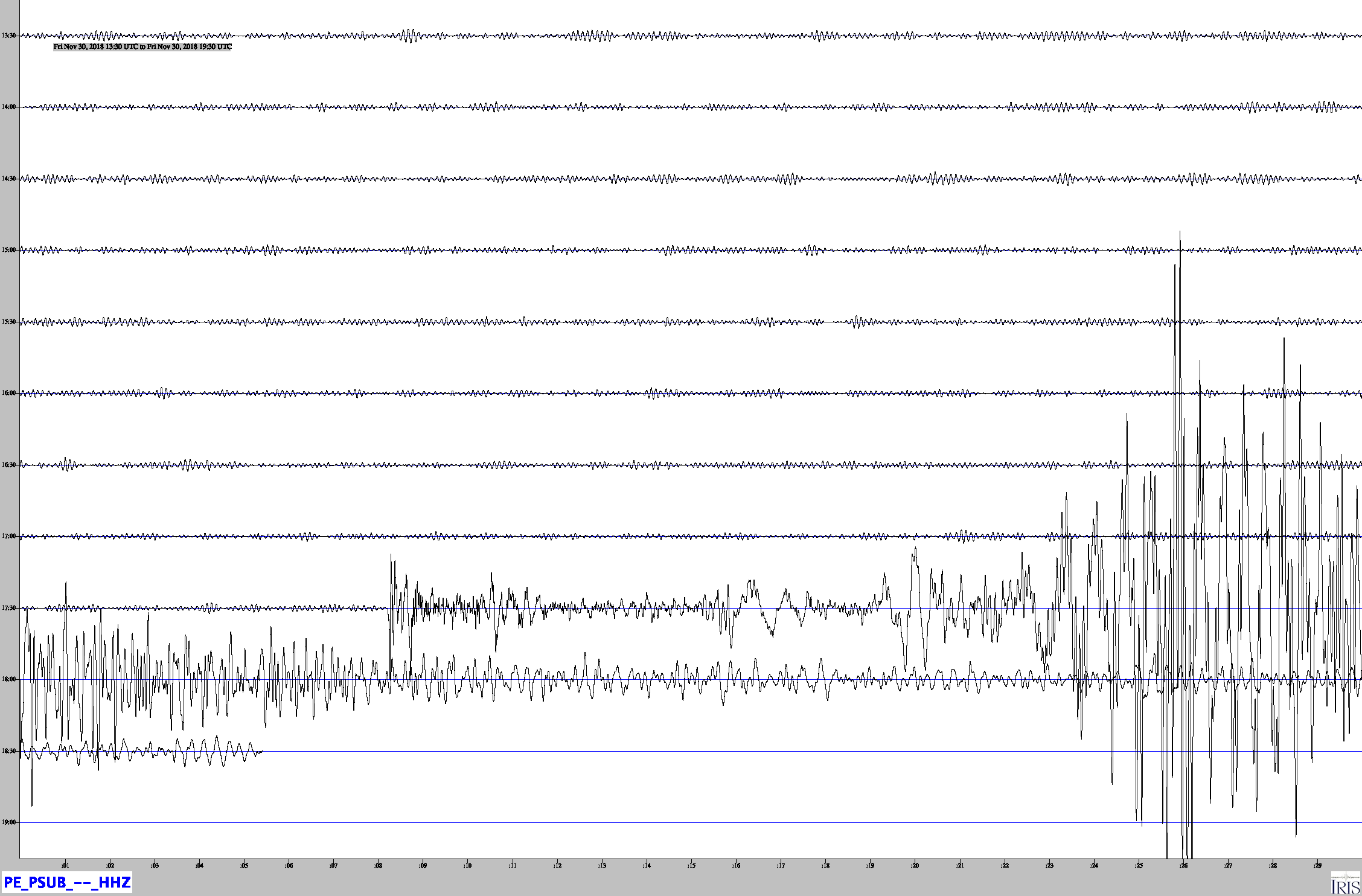
SeisComP3 traces for AM.R8C73.00.SHZ (Exton PA), PE.PSUB.HHZ (Media PA), and LD.GEDE.BHZ (Greenville DE).

Even without filtering, the earthquake shows up very well at our noisy location.

The same as above, but with a 0.7  – 2.0 Hz bandpass filter applied.

A long period trace with a 1 Hz lowpass filter.

Jamaseis heliocorder traces of AM.R8C73.00.SHZ and PE.PSUB.HHZ.

SeisComP3 display showing the fault plane solution for this event.