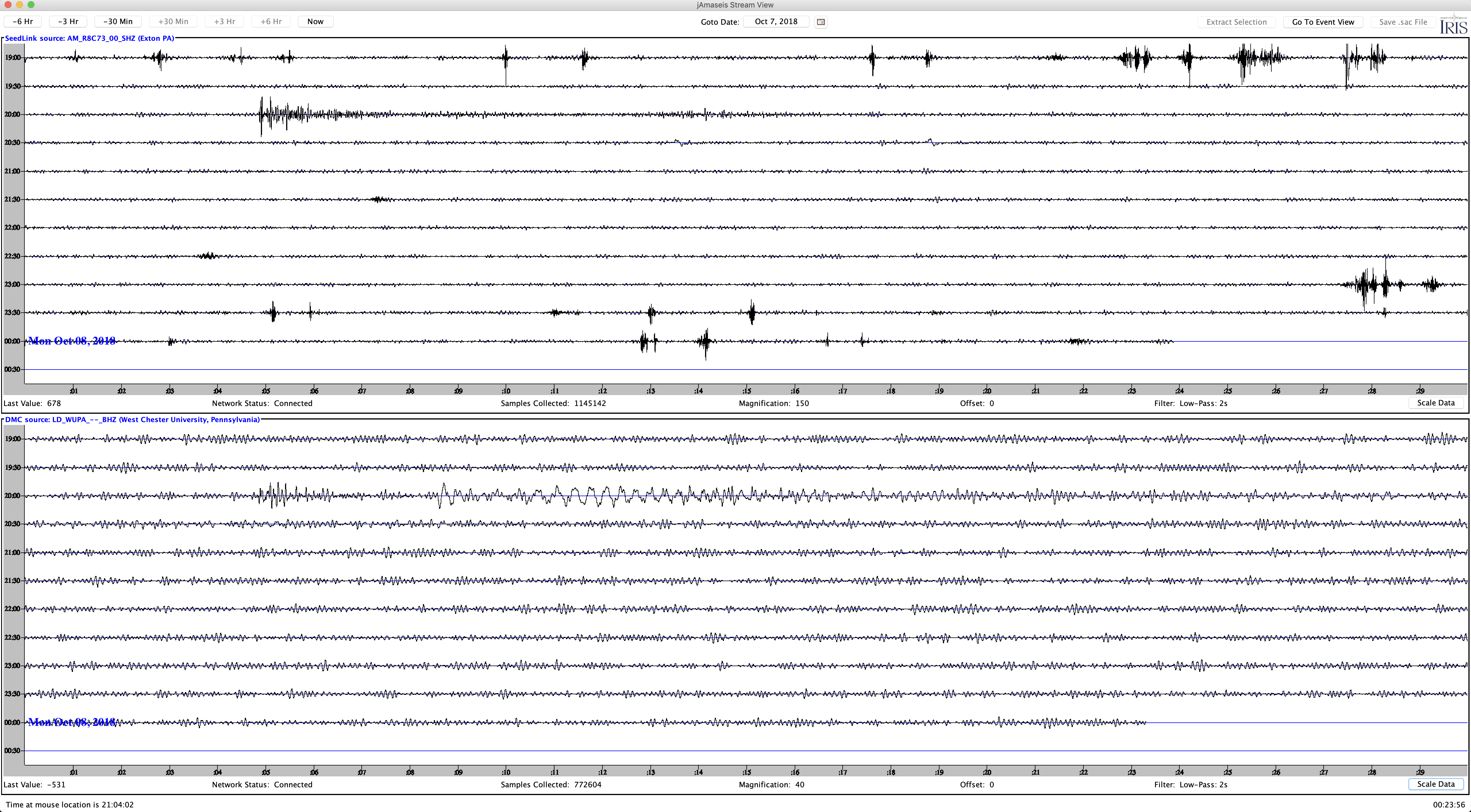
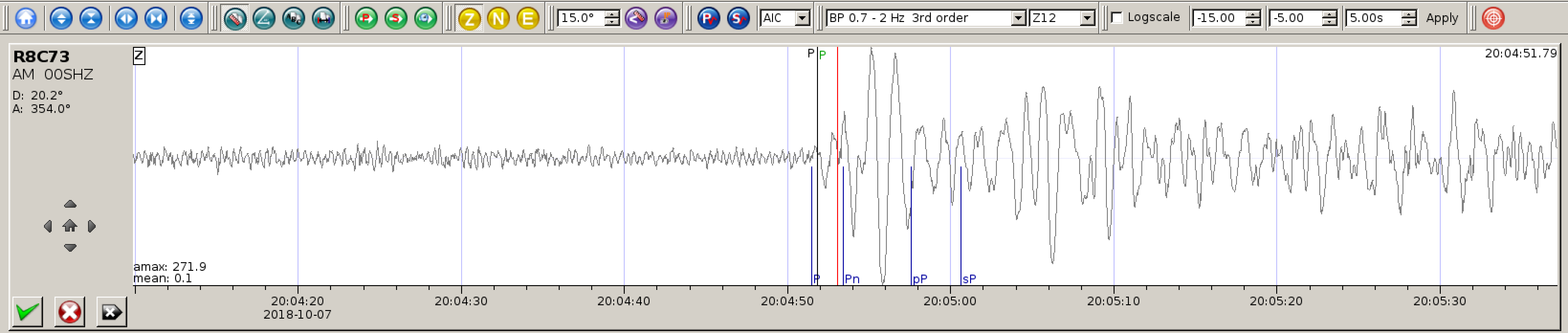
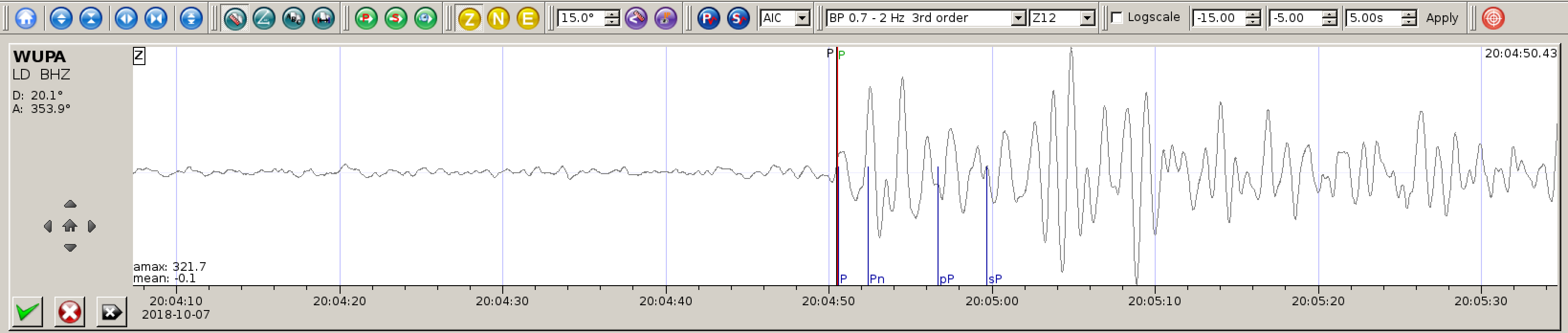
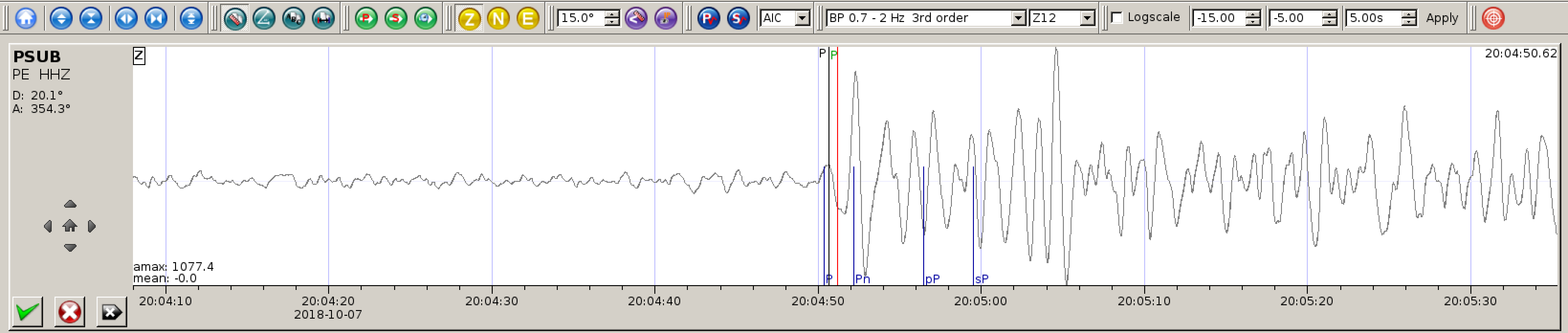
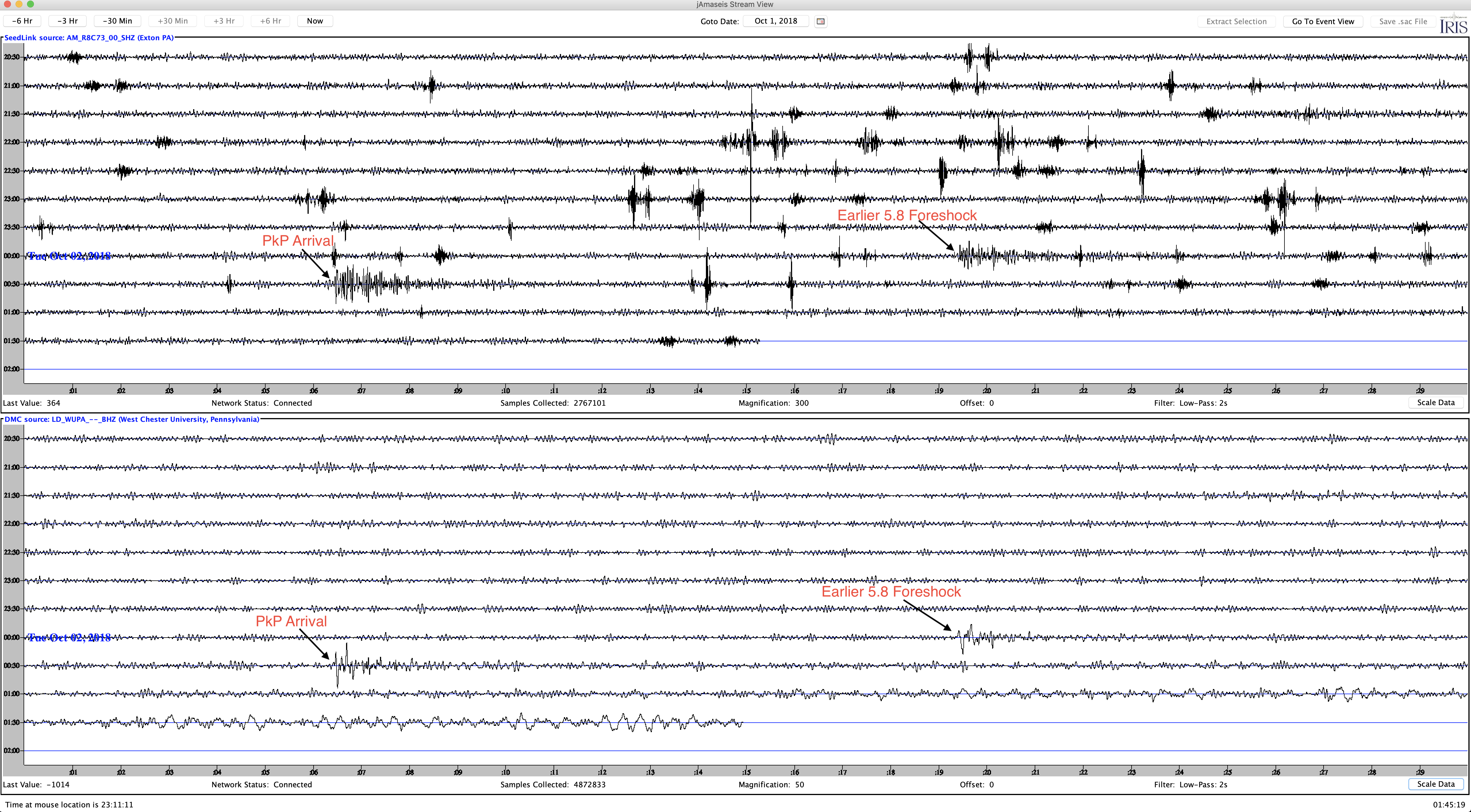
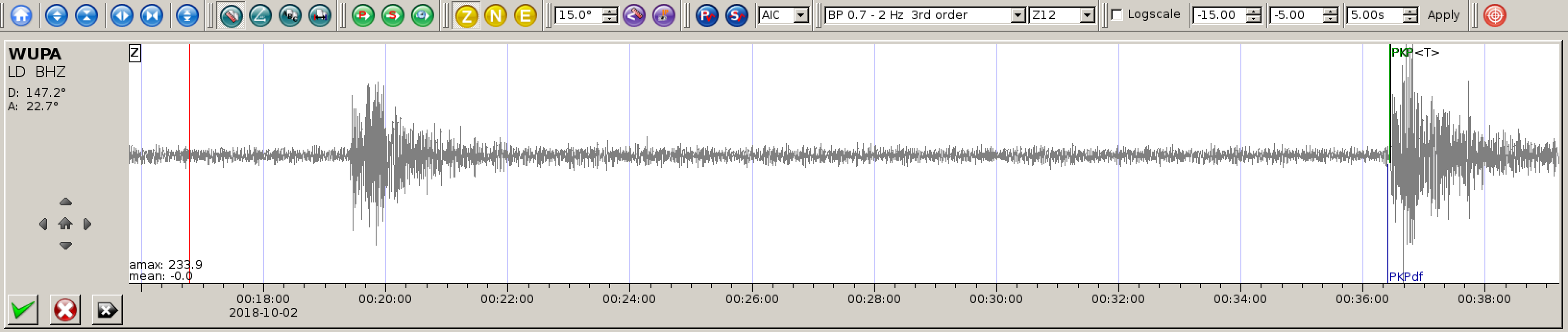
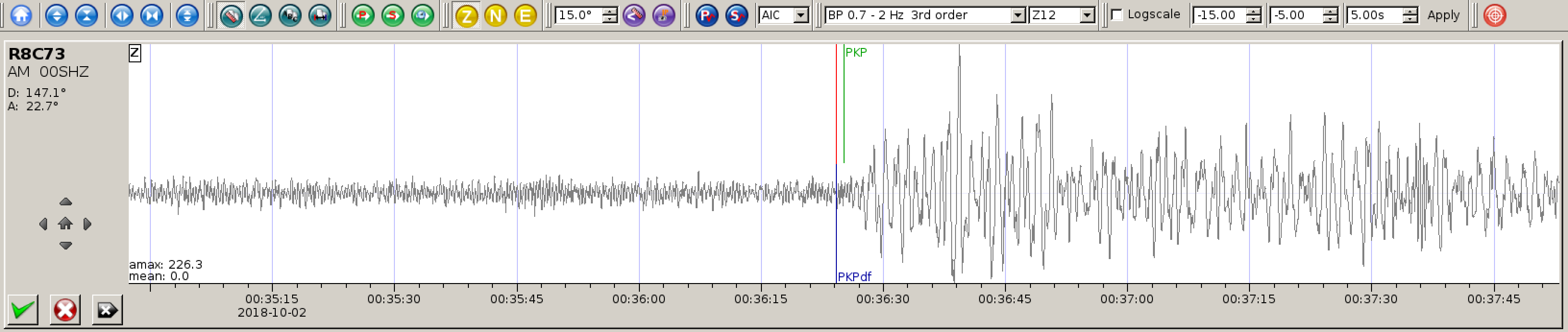
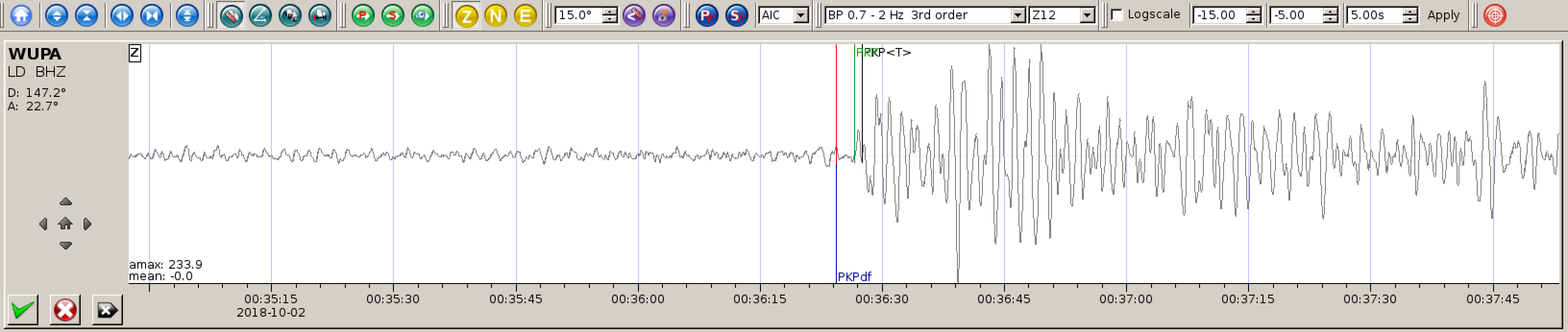
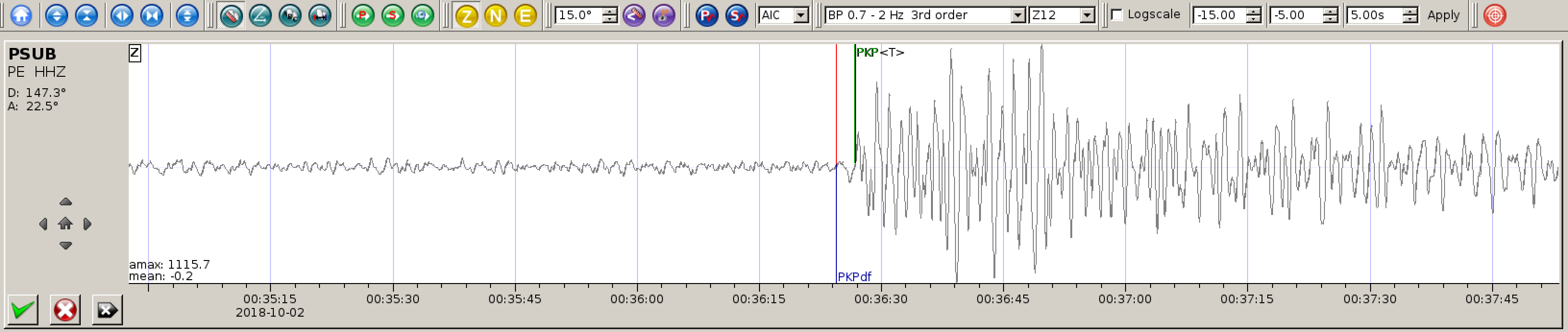
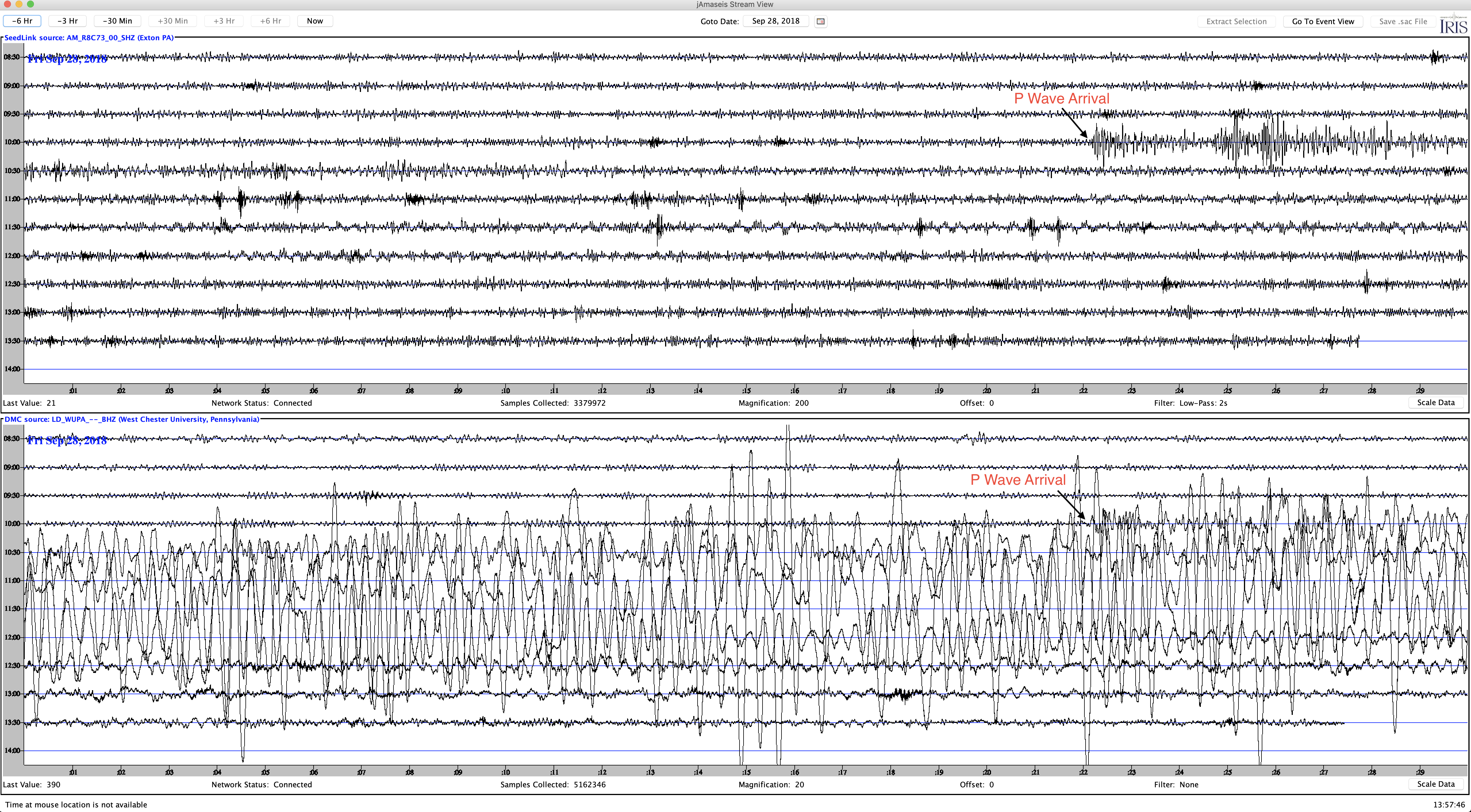
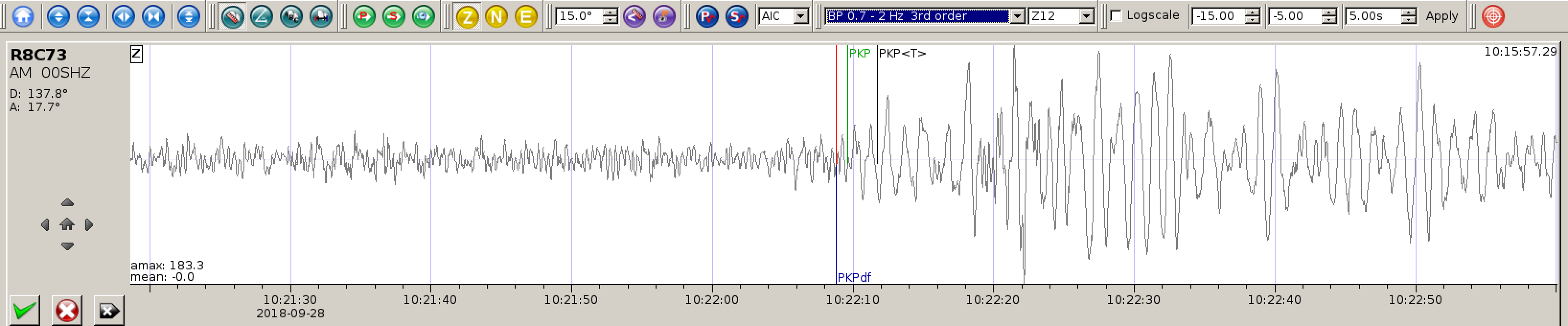
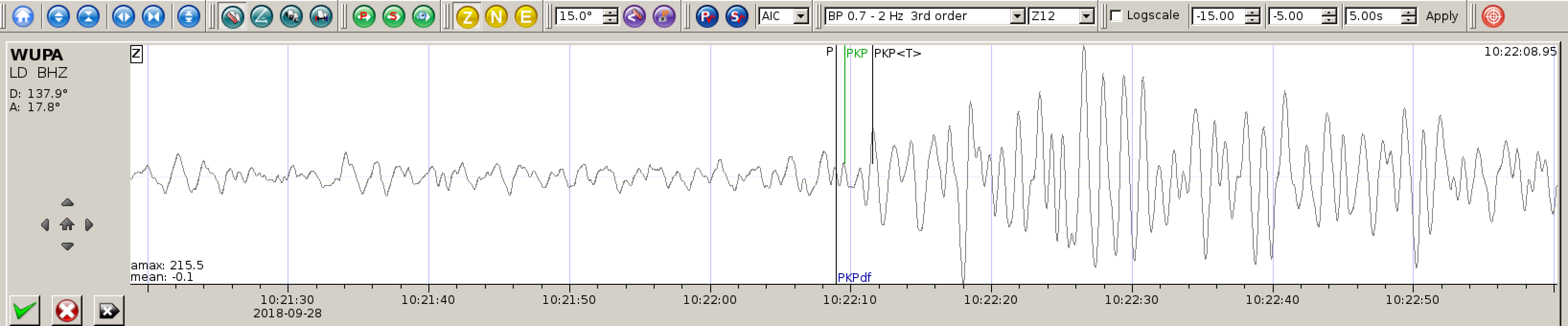
The September 28, 2018, M 7.5 earthquake near Sulawesi, Indonesia occurred as a result of strike-slip faulting at shallow depths within the interior of the Molucca Sea microplate, part of the broader Sunda tectonic plate. Focal mechanism solutions for the earthquake indicate rupture occurred on either a left-lateral north-south striking fault, or along a right-lateral east-west striking fault. Eastern Indonesia is characterized by complex tectonics in which motions of numerous small microplates are accommodating large-scale convergence between the Australia, Sunda, Pacific, and Philippine Sea plates. At the location of the September 28th earthquake, the Sunda plate moves south with respect to Molucca Sea plate at a velocity of about 30 mm/year.
While commonly plotted as points on maps, earthquakes of this size are more appropriately described as slip over a larger fault area. Strike-slip events of the size of the September 28, 2018 earthquake are typically about 120×20 km in size (length x width); modeling of this earthquake implies dimensions of ~80×30 km, predominantly down-dip and south of the hypocenter.
Shallow earthquakes of this size can often have a deadly impact on nearby communities. Historically, this region has hosted several large earthquakes, with fifteen events of M 6.5 and larger within 250 km of the September 28th earthquake over the preceding century. The largest of these was a M 7.9 earthquake in January 1996, about 100 km to the north of the September 28, 2018 event. The 1996 earthquake – a shallow thrust faulting earthquake likely to have occurred on the regional subduction zone system at depth beneath the shallow crust – resulted in approximately 10 fatalities, over 60 injuries, and significant building damage in the local region. The September 28, 2018 earthquake was preceded by a series of small-to-moderate sized earthquakes over the hours leading up to this event; the USGS located 4 other earthquakes of M 4.9 and larger in the epicentral region, beginning with a M 6.1 earthquake three hours earlier and just to the south of the M 7.5 event. There has also been an active aftershock sequence, with ten events of M 4.7 and larger in the three hours following this earthquake. The largest aftershock in this timeframe was M 5.8, about 12 minutes after the M 7.5 earthquake.